
Design solutions that pursue the sound quality and experience you need
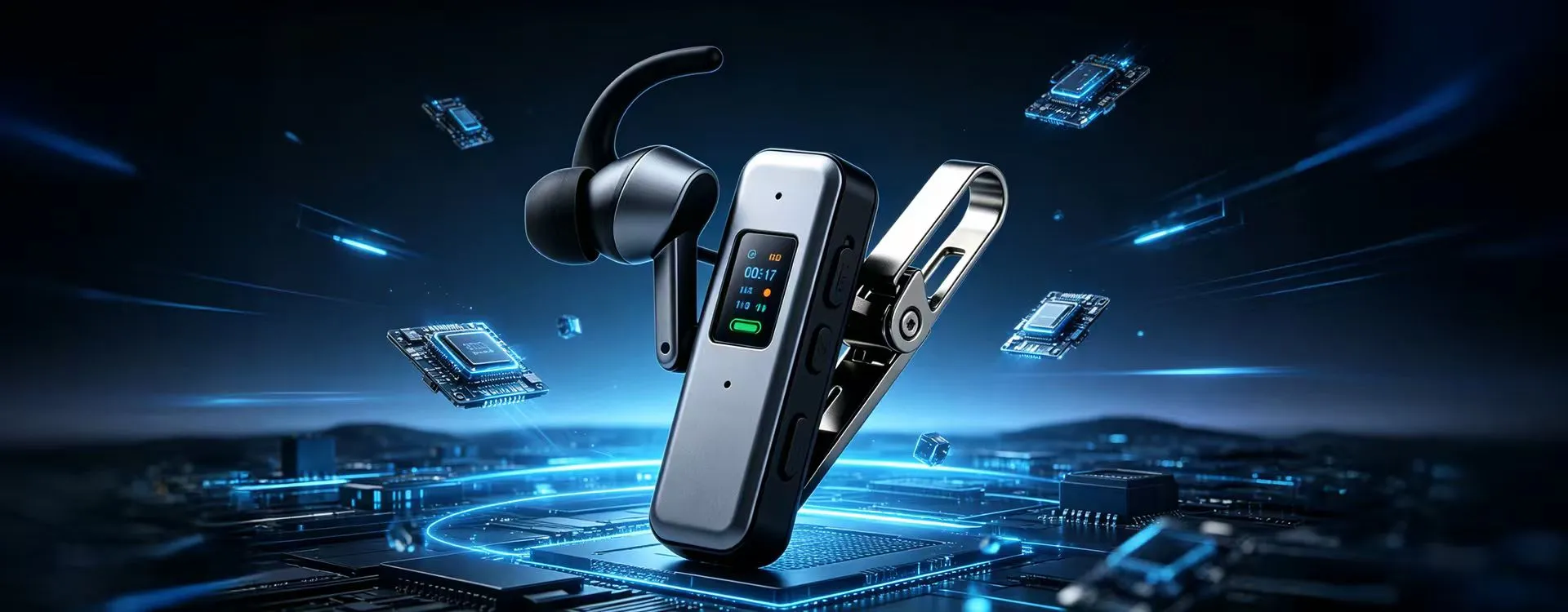
Bluetooth is the most widely adopted wireless transport technology in consumer audio. From the inaugural 1.0 specification in 1999 to the current 6.0 release, the protocol stack, RF performance, and audio delivery mechanisms have evolved continuously. This article walks through the major milestones of the Bluetooth core specification, explains the positioning of A2DP, AVDTP, HFP, and the emerging LE Audio protocols, and outlines the key engineering considerations for Bluetooth SoC selection in PCBA design, giving product managers and audio engineers a complete technical reference.
Bluetooth is the most widely adopted wireless transport technology in consumer audio. From the inaugural 1.0 specification in 1999 to the current 6.0 release, the protocol stack, RF performance, and audio delivery mechanisms have evolved continuously. This article walks through the major milestones of the Bluetooth core specification, explains the positioning of A2DP, AVDTP, HFP, and the emerging LE Audio protocols, and outlines the key engineering considerations for Bluetooth SoC selection in PCBA design, giving product managers and audio engineers a complete technical reference.
The name Bluetooth pays tribute to Harald Bluetooth, the 10th-century Danish king who unified warring factions. In 1998, Ericsson, Nokia, Intel, IBM, and Toshiba jointly formed the Bluetooth Special Interest Group (SIG) with the goal of establishing a global standard for short-range wireless communication, ending the fragmentation of incompatible proprietary protocols.
From a radio standpoint, Bluetooth operates in the globally available 2.4 GHz ISM (Industrial, Scientific, Medical) unlicensed band, spanning 2402 MHz to 2480 MHz. The classic BR/EDR physical layer divides this spectrum into 79 channels of 1 MHz bandwidth each; Bluetooth Low Energy (BLE) uses 40 channels of 2 MHz bandwidth. To coexist with Wi-Fi, ZigBee, microwave ovens, and other 2.4 GHz interferers, Bluetooth employs Frequency Hopping Spread Spectrum (FHSS) at 1600 hops per second — the carrier frequency pseudo-randomly cycles through the channel set, allowing the link to recover lost packets through retransmission even when individual channels are jammed. This hopping behavior is the defining physical-layer feature that distinguishes Bluetooth from Wi-Fi's Direct Sequence Spread Spectrum.
It is worth emphasizing that "Bluetooth" refers to the specification framework, not a chip or product. The actual wireless performance of any device is determined by how the chip vendor implements the RF front-end, baseband, protocol stack scheduling, and application-layer profiles — exactly the dimensions that matter in PCBA solution design.
The core specification's evolution can be divided into three phases. **Phase 1 (1.0 to 2.0)** focused on connectivity. The 1.0 release (1999) defined the baseband protocol and Link Manager Protocol (LMP), but interoperability was poor. 1.1 fixed a long list of compatibility issues; 1.2 introduced Adaptive Frequency Hopping (AFH), which dynamically avoids channels occupied by Wi-Fi. The 2.0+EDR release (2004) raised physical-layer data rates from 1 Mbps to 2 or 3 Mbps, laying the foundation for later A2DP stereo audio transport.
**Phase 2 (3.0 to 4.0)** represents the most significant architectural shift. 3.0+HS leveraged Wi-Fi for high-speed transport, but audio scenarios rarely benefit from this. The truly transformative release was **4.0 (2010)**, which introduced Bluetooth Low Energy as a separate protocol stack branch alongside classical Bluetooth, now referred to as BR/EDR. A single 4.0 chip can support both classical audio and BLE data, but the two stacks cannot interoperate directly — bridging requires application-layer protocols.
**Phase 3 (4.1 to 6.0)** delivered continuous refinement. 4.1 improved coexistence with LTE; 4.2 raised BLE physical-layer data rates to 2 Mbps (uncoded) and 1 Mbps (coded). **5.0** (2016) was the largest PHY overhaul in Bluetooth history: LE 2M PHY doubled BLE throughput to 2 Mbps; LE Coded PHY achieved 500 kbps and 125 kbps long-range modes via forward error correction, extending theoretical range to 300 meters; the advertising channel payload expanded to 255 bytes, planting the seed for LE Audio broadcast applications. **5.1** added centimeter-level direction finding (AoA/AoD). **5.2** (2019) introduced the LE Audio core: LC3 codec and broadcast audio. **5.3** (2021) optimized connection stability and power consumption. **5.4** (2023) further enhanced low-power connections and large-scale device management. Building on that foundation, **6.0** deepens LE Audio delivery, introduces Bluetooth Channel Sounding for higher-accuracy distance sensing, and adds tighter support for AI-driven audio side-channels, consolidating Bluetooth's role in low-power audio and short-range sensing fusion scenarios.
Bluetooth audio is not a single protocol but a family of cooperating profiles. **A2DP (Advanced Audio Distribution Profile)** defines the application layer for streaming stereo music from a source device (typically a smartphone) to headphones, with codec negotiation, transport buffering, and retransmission policies. A2DP mandates SBC (Sub-Band Codec) and optionally supports AAC, aptX, aptX HD, LDAC, and LHDC for higher bitrate or lower latency. Below A2DP sits **AVDTP (Audio/Video Distribution Transport Protocol)**, which manages signaling and data channels and runs exclusively on BR/EDR — it cannot operate over BLE, which is why LE Audio required an entirely new protocol architecture.
**HFP (Hands-Free Profile)** governs voice call scenarios, supporting 8 kHz / 16 kHz narrow-band or wide-band speech, microphone uplink, and AT command control. In a TWS earbud, A2DP handles music playback while HFP handles calls, with the SoC's internal audio router switching seamlessly between the two.
The LE Audio era brings a fundamental protocol re-architecture. **LC3 (Low Complexity Communications Codec)** replaces SBC as the new mandatory codec and delivers better audio quality at lower bitrates. **ISO (Isochronous Channels)** support multi-device synchronized reception, providing the physical-layer foundation for true low-latency TWS and broadcast audio. **LE Audio Broadcast** allows a single source to stream to an unlimited number of receivers — opening use cases in museums, fitness centers, airports, and conference venues.
For audio solution engineers, the Bluetooth version number is just the starting point. The real determinants of product experience are the chip vendor's combined strength across four dimensions: protocol stack maturity, RF performance, audio chain quality, and power consumption.
On the RF side, key parameters include transmit power (Class 1 typically +20 dBm, Class 2 +4 to +8 dBm), receiver sensitivity (typically better than -90 dBm), and coexistence stability with 2.4 GHz Wi-Fi. On the audio side, designers must verify DAC and I2S interface specifications, supported sampling rates and bit depths, on-chip DSP capabilities (EQ, dynamic range compression, virtual surround), and multi-microphone interfaces (PDM or analog MIC). Power consumption directly defines battery life: typical Bluetooth music playback current sits between 5 and 15 mA, with leading SoCs achieving under 8 mA, and LE Audio solutions pushing toward 4 mA.
Liwei Electronics has built deep expertise in Bluetooth audio solutions across TWS earbuds, sports earphones, ANC headphones, and children's earphones, maintaining long-term partnerships with Qualcomm, BES (Bestechnic), ZhongKe LanXun (Bluetrum), and JL (JieLi). For live-streaming karaoke earphones and 2.4 GHz + Bluetooth dual-mode gaming headsets, our engineers optimize the RF front-end, antenna routing, power management, and PCB stackup holistically, ensuring that the Bluetooth link meets the mass-production yield and long-term reliability expectations of brand customers.
LE Audio was first introduced in the Bluetooth 5.2 specification in 2019, with the complete specification set finalized in 2022 and high-volume adoption in mid-to-high-end TWS earbuds from 2023 onward. Subsequent 5.4 and 6.0 specifications have continued to harden the LE Audio foundation, and over the next three to five years this stack will progressively replace classic A2DP as the de facto standard for consumer Bluetooth audio, offering lower power consumption, higher audio quality ceilings, more flexible multi-device switching, and native broadcast capability. Simultaneously, AI-driven use cases — adaptive noise cancellation, AI call enhancement, on-device voice wake-up — demand Bluetooth SoCs with stronger DSP or NPU compute, raising new challenges for chip selection and solution design. Liwei Electronics will continue to track LE Audio commercialization closely and deliver end-to-end technical support covering chip selection, PCBA design, and mass-production testing for brand customers.
Shenzhen Liwei Electronic Technology Co., Ltd. has specialized in audio headphone electronic solution design for over 12 years, providing comprehensive chip and PCBA solutions. The product line spans 10 categories, including live-streaming karaoke earphones, 2.4 GHz + Bluetooth dual-mode gaming headsets, Bluetooth music earphones, industrial hearing protection, hunting / labor-protection earphones, educational / children's earphones, wire-controlled headphone PCBA, Bluetooth transmitters, dry-battery boost boards, and touch chips — with 15+ renowned brands and 300+ clients served. **Contact Liwei Electronics for customized Bluetooth audio solutions.**
Keywords: Bluetooth audio, BLE, LE Audio