
Design solutions that pursue the sound quality and experience you need
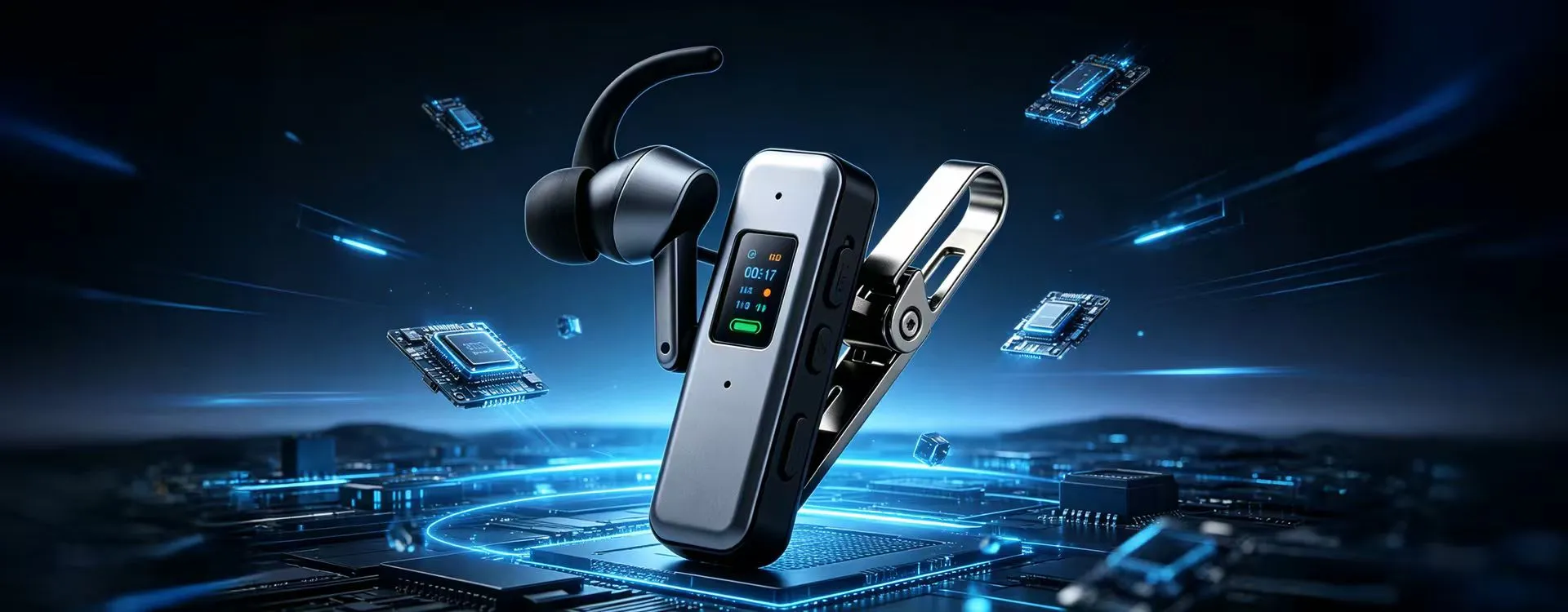
The Bluetooth SoC is the single most decisive component in the electronics architecture of any wireless headphone. It hosts the radio front end, the audio codec chain, the protocol stack, power management and the peripheral interfaces that connect the microphone, speaker, battery and controls. For product managers and sourcing teams, the platform decision made in week one keeps echoing through certification, tuning and mass production. This article compares the four platform families most commonly used in the Chinese audio supply chain - Qualcomm, BES, Airoha and JieLi - and proposes a five-dimension scoring framework for matching a platform to a concrete use case.
The core message is deliberately unglamorous: match the platform to the product definition, not to the spec sheet. A flagship codec list means nothing if the antenna layout cannot hold a stable link, and a low unit price means nothing if the SDK slows the team down for an extra month.
Driver choice and acoustic tuning shape the sound signature, but the SoC determines how consistently that sound reaches the ear. RF performance governs connection stability in congested 2.4 GHz environments; the codec chain caps the audio quality ceiling; power management decides whether the rated battery life is real or theoretical; and the peripheral set decides which features - dual microphones, ANC, touch control, 2.4 GHz coexistence - are even possible.
A platform mismatch usually surfaces late, in the form of intermittent audio dropouts, high latency in call monitoring, over-budget current draw, or supply risk at the moment a project is ramping. That is why Liwei Electronics defines the product first - target market, price band, key features - and only then selects the SoC family, rather than starting from a chip and shaping the product around it.
The four platform families that dominate wireless headphone design in China today can be positioned roughly as follows:
Qualcomm sits at the premium end. Its ecosystem is mature, with broad support for aptX Adaptive and dedicated low-latency gaming modes. It is a natural fit for flagship models where audio quality and latency justify the higher platform licensing cost and unit price.
BES (Hengxuan) represents the domestic high-performance tier. Its SoCs are common in active-noise-cancelling TWS earbuds and premium over-ear models, with high integration and mature ANC algorithm support - a strong match for projects that are tight on power and PCB space.
Airoha, part of the MediaTek group, is known for reliable RF and competitive cost, with a broad selection of reference designs. It is the workhorse platform for mainstream TWS earbuds and sports earphones, and lead times are generally manageable.
JieLi focuses on cost efficiency and fast delivery. It holds a solid position in entry-to-mid Bluetooth music earphones, educational earphones and simpler TWS products, making it a reasonable starting point for cost-sensitive projects with clearly scoped features.
This article deliberately avoids chip-level benchmark numbers: specifications shift between generations and package variants, and only the official datasheet plus real-world tuning results are reliable inputs for a selection decision.
For B2B evaluation, we recommend scoring candidate platforms against the following five dimensions:
1. Audio codec support. Confirm whether the target market needs anything beyond the mandatory SBC/AAC baseline - for example aptX, LDAC, or the LC3 codec that ships with LE Audio. Codec capability drives the audio positioning, and some codecs involve brand licensing obligations that affect cost planning.
2. RF performance and antenna design. Look at receive sensitivity, transmit power, coexistence behavior, and the availability of BQB/FCC/CE certification guidance. In practice, the antenna layout and matching network on the PCBA often decide connection stability more than the datasheet numbers do.
3. Power consumption and battery life. Compare current draw across operating modes, wake-up latency, and low-power broadcast support. These figures determine the battery size, the charging architecture and the final endurance claims.
4. SDK and debugging tooling. Evaluate the compiler and IDE, debug interfaces, quality of sample code, and - often the decisive factor - how fast the FAE responds. This directly controls development time and how quickly field issues can be root-caused in mass production.
5. Supply chain and delivery. Lead time, minimum order quantity, distributor channel stability and willingness to commit to long-term supply are all risk points that belong in the scoring table before any engineering work starts.
TWS music earbuds favour high integration, low power and a mature ANC ecosystem - BES and Airoha are the usual suspects. 2.4 GHz + Bluetooth dual-mode gaming headsets must be judged on the private 2.4 GHz link's latency and interference resistance and on seamless mode switching; Qualcomm aptX Adaptive or dedicated gaming platforms are common choices. Live-streaming and karaoke earphones need low-latency monitoring, dual-microphone noise reduction and a reliable audio loopback path - verify the MIC routing and echo handling early in platform evaluation. Industrial hearing-protection earphones prioritise robust RF, wide operating temperature, long battery life and mechanical ruggedness, so a proven platform with field history should win over a newer one with better paper specs.
Liwei Electronics takes these five dimensions and applies them through the whole delivery chain: chip selection, schematic and PCBA layout, antenna tuning, software bring-up and production calibration, so the platform choice made on paper survives contact with real manufacturing.
Shenzhen Liwei Electronic Technology Co., Ltd. has specialized in audio headphone electronic solution design for over 12 years, providing comprehensive chip and PCBA solutions. The product line spans 10 categories, including live-streaming karaoke earphones, 2.4 GHz + Bluetooth dual-mode gaming headsets, Bluetooth music earphones, industrial hearing protection, hunting / labor-protection earphones, educational / children's earphones, wire-controlled headphone PCBA, Bluetooth transmitters, dry-battery boost boards, and touch chips - with 15+ renowned brands and 300+ clients served. Request a quote from Liwei Electronics for a tailored Bluetooth audio SoC selection and PCBA reference design.
Keywords: Bluetooth audio SoC, Bluetooth chip selection, TWS headset solution, LE Audio, Bluetooth 5.3