
Design solutions that pursue the sound quality and experience you need
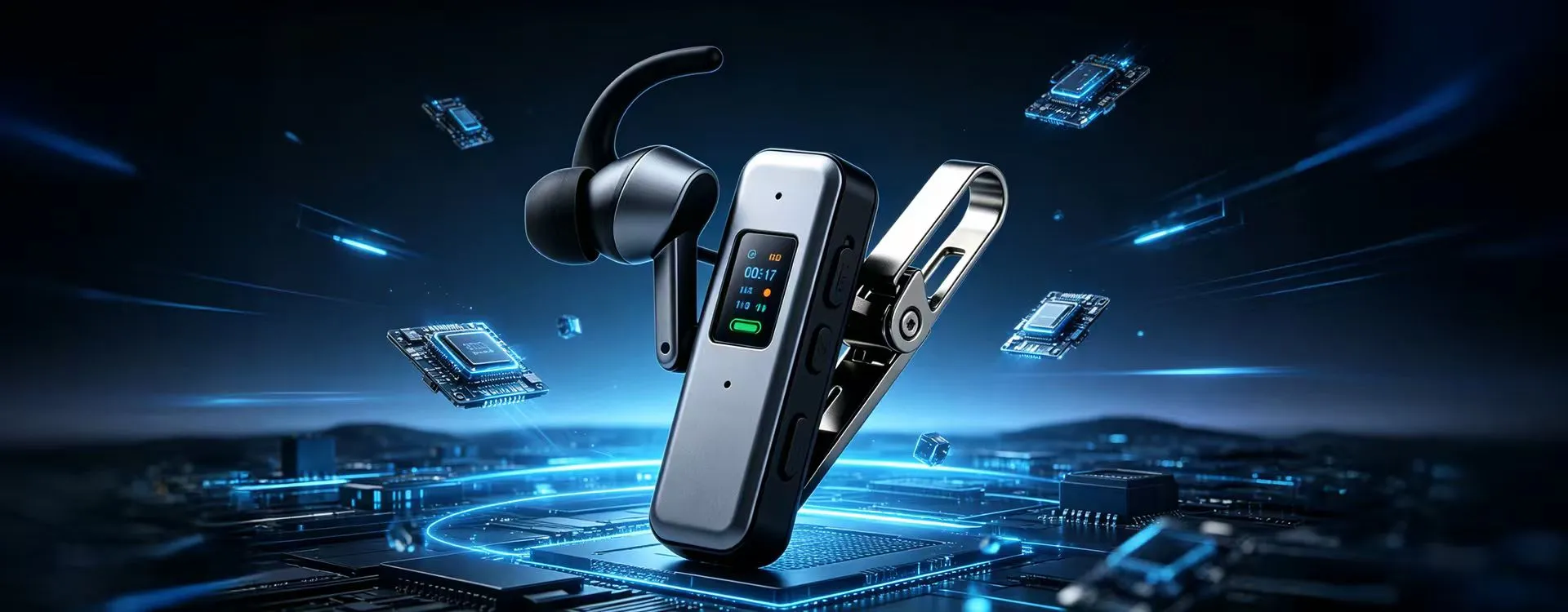
Bluetooth Multipoint allows a single wireless headset to maintain ACL link connections with two or more source devices at the same time. In a typical workflow, a user wears the headset while staying paired to both a laptop for video conferencing and a phone for incoming calls. When a call arrives on the phone, the headset automatically pauses the laptop audio and switches to the call, then returns to the previous source when the call ends. This capability is not part of the core Bluetooth specification by default; it requires dedicated firmware and protocol stack support on the headset side. From a protocol perspective, the headset maintains multiple independent ACL links, but the A2DP audio stream is point-to-point, so only one source can be the active audio provider at any given moment. The protocol stack decides which source is currently active based on event priority and link state.
Two main implementation patterns exist in production designs. The first is standard multipoint, where the headset keeps two ACL links alive but only one source streams audio at a time. When the second source starts playback or receives a call, the stack pauses the current stream and activates the new one through AVRCP signaling. The second pattern is Dual Audio, introduced as part of the Bluetooth 5.0 broadcast extensions, which lets one source device stream independent audio to two sink devices simultaneously. The two patterns address different use cases: standard multipoint serves headset-side dual-source switching, while Dual Audio serves one-source-two-headset scenarios such as shared listening. Real-world limitations include reduced link stability when devices are far apart, brand-specific compatibility issues, and an increase in power consumption of roughly 15 to 30 percent when two ACL links are maintained in parallel. Platform selection should weigh multipoint support against power budget and cost.
Implementing multipoint requires coordination across multiple layers of the Bluetooth stack. The controller must support concurrent ACL link management with independent state machines and buffer pools for each link. On the host side, separate A2DP and HFP profile instances are created for each connected device, with dedicated signaling and media channels. When a source switch is triggered, the stack uses AVRCP PAUSE on the current source and activates the new source's media channel. For HFP scenarios, incoming-call events are propagated across links using AT commands, and the link manager applies priority rules to decide which call takes precedence. The end-to-end switching latency is typically between one and three seconds, depending on the SoC platform and stack optimization. Tuning link priority weights and switch timeout parameters is one of the most effective levers for improving the user-perceived experience.
Adding multipoint to a headset design requires balancing four dimensions: chip selection, power budget, antenna design, and user experience. On the chip side, the chosen Bluetooth SoC must ship with multipoint-capable firmware; several entry-level SoCs only support a single ACL link. Power is the largest design challenge, as two concurrent links can raise current draw by 15 to 30 percent compared to single-link operation. Connection interval and sniff parameters must be tuned carefully to keep the power penalty within the product's battery life target. Antenna design should account for the RF interference that occurs when two links are active in the same 2.4 GHz band. From a UX perspective, the headset needs clear switching tones, accurate connection status indicators, and a guided pairing flow that prevents the user from getting lost when managing multiple devices. Liwei Electronics supports multipoint integration across mainstream Bluetooth audio platforms and can tune link parameters to match each customer's product positioning and power budget.
Q: How many devices can a Bluetooth multipoint headset connect to at once?
A: Mainstream Bluetooth headset designs support two source devices concurrently. A few high-end platforms can support three devices, but stability tends to degrade. Two is the most mature and widely deployed configuration in commercial products.
Q: How much extra power does multipoint consume compared to single-point?
A: Maintaining two ACL links typically increases power consumption by 15 to 30 percent over single-link operation. Sniff interval and connection parameter optimization can reduce this penalty, with the exact value depending on the SoC platform and configuration.
Q: Is multipoint compatibility consistent across phone brands?
A: Multipoint works reliably in most cases, but some phone vendors implement proprietary Bluetooth extensions that may cause switching delays or audio interruptions. Compatibility testing across mainstream phone models is a required step in the design verification phase.
Shenzhen Liwei Electronics Co., Ltd is an audio headset electronic solution design house with 12 years of experience. We provide full Bluetooth headset PCBA solution design services covering multipoint connection, noise cancellation, and low-latency audio transmission. Trusted by 15+ established brands and 300+ customers worldwide, we welcome inquiries for custom Bluetooth audio solutions.
Keywords: Bluetooth multipoint, headset PCBA, A2DP source switching, ACL link multiplexing, Dual Audio