
Design solutions that pursue the sound quality and experience you need
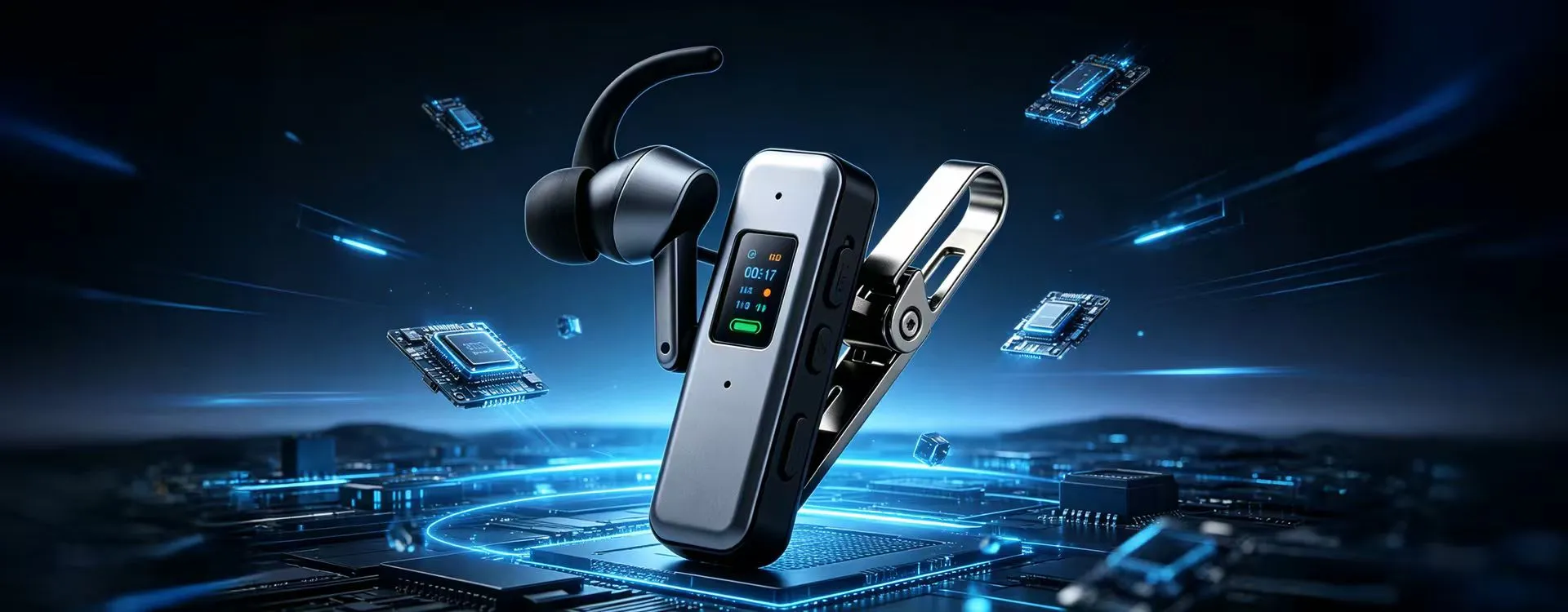
A HIFI dongle — the little USB-C DAC/amplifier that plugs straight into a phone — lives or dies on two things: it has to be tiny, and it has to sound clearly better than the phone's own headphone jack. Those goals normally conflict. Higher decoding precision usually means more silicon and more surrounding circuitry. A traditional dongle chains a USB receiver, a DAC, and an amplifier stage across multiple chips, which inflates both PCB area and power draw. So when selecting the main SoC, integration and analog performance have to be evaluated together — one without the other misses the point.
The BP2640Ax packs a USB 2.0 HS OTG digital interface, three 32-bit DAC channels, and three 32-bit ADC channels (SNR ≥ 105 dB) into a single QFN40 5×5 mm package. In a dongle design, USB digital audio feeds directly into the chip, the DAC handles decoding, and the differential output reaches 120 dB SNR — a clean analog source that, paired with a well-designed headphone amplifier stage, drives most IEMs and many low-impedance headphones. Because everything happens on one die, the PCB can shrink to USB-stick dimensions and the BOM stays lean, which is exactly what a volume dongle product needs.
The BP2640Ax also integrates Bluetooth 6.0 dual-mode and a proprietary 2.4G link with latency under 5 ms. The same chip therefore supports both a wired USB dongle mode and a wireless Bluetooth decoding mode. For a brand, that means one hardware platform covers "wired plug-in" and "wireless connection" as two product forms — one firmware codebase, one production line, more flexible product planning. The low-latency 2.4G link additionally opens up latency-sensitive scenarios such as mobile gaming audio.
A dongle draws its power from the phone's USB port, and supply fluctuation feeds straight into analog output quality. Three practical points matter: give the DAC's analog section an independent, well-filtered supply so USB noise does not leak in; route the USB differential pair to high-speed signal standards with length matching; and split the ground between the digital and analog regions to keep digital noise from coupling into the audio path. Liwei Electronics provides the complete BP2640Ax package — schematics, PCB layout, firmware bring-up, and production calibration.
Q: Can a BP2640Ax dongle drive higher-impedance headphones?
A: The DAC's differential output SNR of 120 dB provides a clean analog source; ultimate drive capability depends on the downstream amplifier stage. With a properly designed headphone amplifier circuit, the solution covers most IEMs and mid-to-low impedance headphones. Exact drive figures should be evaluated against the chosen amplifier design.
Q: Can the same chip support both wired and Bluetooth modes?
A: Yes. The BP2640Ax integrates USB 2.0 HS OTG and Bluetooth 6.0 dual-mode, so USB plug-in decoding and wireless Bluetooth reception coexist on one hardware platform. Firmware switches the working mode, making it ideal for a combined "dongle + Bluetooth DAC" product.
Q: What support does Liwei Electronics offer from design to mass production?
A: Liwei Electronics delivers the complete BP2640Ax PCBA solution, including schematic design, PCB layout, firmware debugging, and production calibration. With 12 years of audio design experience serving 15+ well-known brands and 300+ customers, we welcome you to request a quote for a custom solution.
Shenzhen Liwei Electronics specializes in audio headphone electronic design, delivering complete chip and PCBA solutions with 12 years of experience, 15+ well-known brands, and 300+ customers. Our BP2640Ax-based HIFI dongle and portable decoding solutions are production-proven. Contact us to request a quote for your custom audio solution.
Shenzhen Liwei Electronics specializes in audio headphone electronic design, delivering complete chip and PCBA solutions with 12 years of experience, 15+ well-known brands, and 300+ customers. Contact us to request a quote for your custom audio solution.
Keywords: BP2640Ax, HIFI dongle DAC, portable USB DAC amplifier, USB-C dongle solution