
Design solutions that pursue the sound quality and experience you need
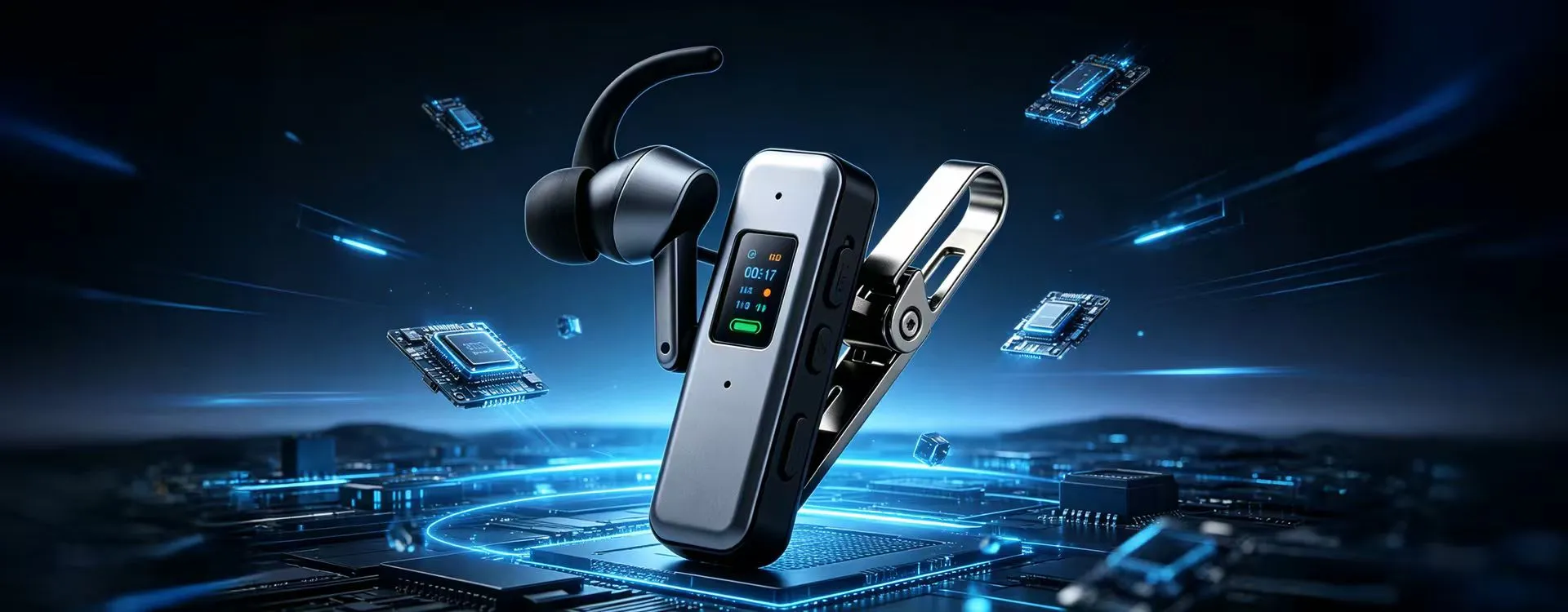
Adaptive noise cancellation hinges on filter parameters that update in real time as external noise changes. Traditional fixed-coefficient ANC performs well in a single controlled scenario but degrades rapidly when the noise environment shifts. Adaptive algorithms capture environmental noise via a reference microphone and continuously refine the secondary path model coefficients using adaptive filtering methods such as LMS (Least Mean Squares) or RLS (Recursive Least Squares), ensuring the anti-noise signal precisely matches residual noise.
The key advantage over fixed-coefficient filters is scenario adaptability. When a user walks from a quiet office into a noisy subway car, the algorithm converges within hundreds of milliseconds and re-establishes the optimal cancellation response curve. This rapid convergence depends on the step-size factor and filter order, requiring a deliberate trade-off between convergence speed and steady-state error.
Leakage effects occur when the anti-noise signal from the secondary source physically leaks back to the reference microphone, forming a feedback loop. This acoustic leakage destabilizes the closed-loop system and, in severe cases, causes self-oscillation—perceived by users as howling or low-frequency pulsation. The effect is particularly pronounced in in-ear and semi-in-ear designs, where the acoustic seal between the ear tip and ear canal wall cannot be fully guaranteed.
Leakage compensation tackles this by building a leakage path model at the algorithm level. By pre-measuring or estimating the leakage path transfer function during runtime and embedding it into the adaptive filter's update equation, the algorithm subtracts the leakage component before computing the anti-noise output. The Normalized LMS (NLMS) variant further introduces power normalization, improving numerical stability when input signal power fluctuates sharply.
In production development, implementing adaptive ANC on a DSP chip involves multiple engineering constraints. First is computational complexity—RLS offers superior convergence but its O(N²) cost is impractical for real-time execution on low-power DSPs, so most products adopt LMS or its variants (NLMS, Block LMS) as the core algorithm. Second is latency management: the chain delay from reference microphone capture to anti-noise output directly determines the upper frequency bound of the effective cancellation range.
Accurate measurement of leakage path parameters is the linchpin of effective compensation. In engineering practice, a dual-channel measurement method is standard: in an anechoic chamber, impulse responses of both the primary and secondary paths are captured, and the leakage model is constructed through comparison. For in-ear products, leakage differences across ear tip sizes and insertion depths necessitate multiple leakage models with dynamic switching via wear-detection sensors.
Verification should cover multiple wearing scenarios: normal fit, loose fit, and alternative ear tip sizes. By comparing the attenuation curve with and without leakage compensation, the improvement in the low-frequency band (20–200 Hz) can be quantified. Ideally, leakage compensation should boost low-frequency attenuation depth by 3–6 dB while eliminating self-oscillation risk.
Q: What is the primary difference between adaptive ANC and fixed-parameter ANC?
A: Fixed-parameter ANC uses pre-tuned filter coefficients suited for stable noise environments, while adaptive ANC dynamically updates filter coefficients by estimating noise characteristics in real time, automatically adjusting its cancellation strategy as the noise environment changes.
Q: Is leakage compensation necessary for all headphone types?
A: Leakage compensation is most critical for in-ear and semi-in-ear designs, where ear canal sealing is easily affected by wearing conditions. Over-ear headphones benefit from better physical isolation, reducing leakage impact, but enabling compensation at low frequencies still improves system stability.
Q: How does adaptive ANC affect power consumption?
A: Power consumption depends on filter order and update frequency. Using a low-order LMS algorithm with event-driven updates—activating adaptive processing only when noise characteristics change—keeps additional power draw within 5–10% of total system power, suitable for power-sensitive form factors like TWS earbuds.
Shenzhen Liwei Electronic Technology Co., Ltd. specializes in audio headset electronic solutions, offering chip selection, PCBA design, and complete ANC algorithm packages. Our adaptive ANC solutions have been validated in mass production across multiple TWS and over-ear products. Contact Liwei Electronics to request a customized audio solution.
Keywords: adaptive noise cancellation, leakage compensation, LMS algorithm, DSP ANC