
Design solutions that pursue the sound quality and experience you need
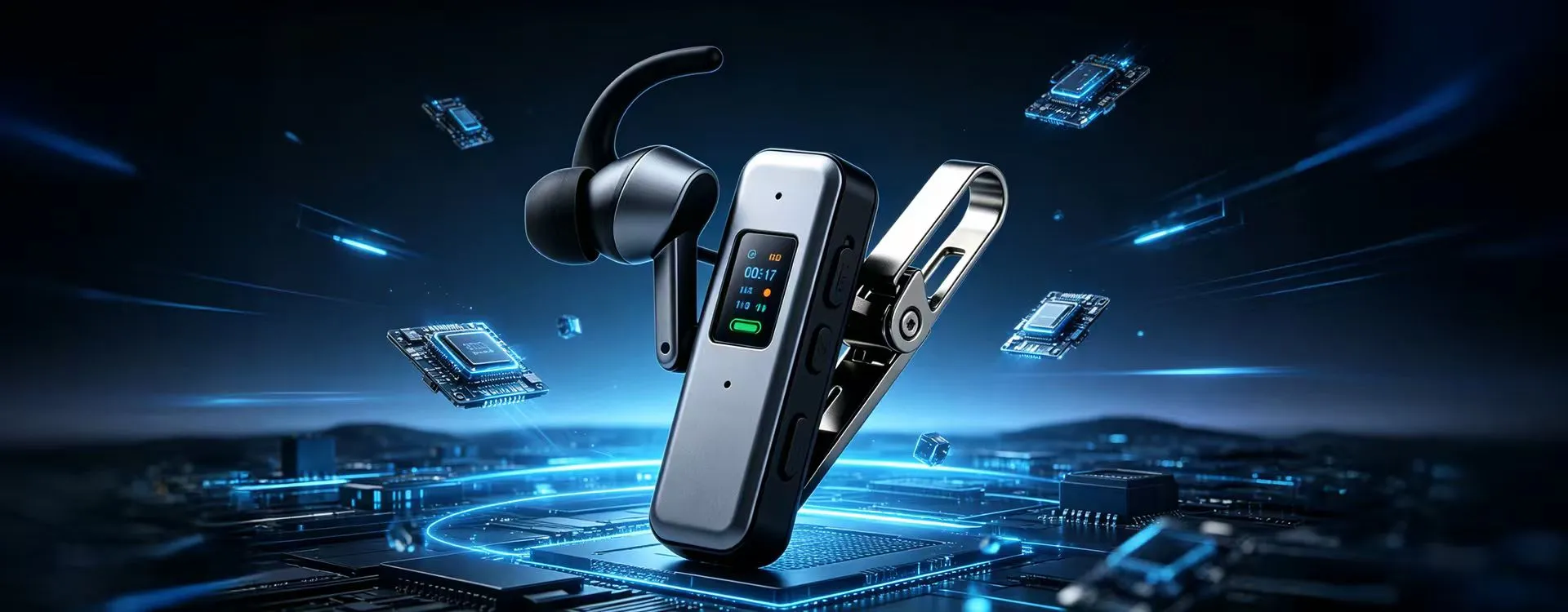
In modern headset design, passive isolation and active noise cancellation (ANC) are not competing options but two complementary stages of defense. Passive structures first attenuate ambient sound through physical sealing and damping, and ANC algorithms then close the gap in the low-frequency band. This article walks through the engineering cooperation between the two: from insertion-loss curves and target-curve alignment to system delay and leakage compensation.
---
Passive isolation is the dB-level attenuation achieved by the headset shell, ear pads, and silicone tips physically blocking acoustic energy from entering the ear canal. It works most efficiently above 1 kHz and falls off at roughly 6 dB/octave below 200 Hz. The insertion-loss curve is governed by the mass law: thicker pads and a tighter seal produce higher broadband attenuation.
In-ear designs rely on silicone or memory-foam tips that conform to the ear canal geometry to achieve an airtight seal. Any leakage on the low frequencies can drop the entire curve by several dB. Over-ear designs depend on the ear-cup geometry and the headband clamp force; an appropriate clamping pressure is the primary knob for sealing.
Material layering such as silicone plus foam plus a breathable mesh improves mid- and high-frequency absorption, but it always trades against breathability and long-wearing comfort. Practical designs therefore walk the line between isolation depth and wearer comfort rather than optimizing either alone.
ANC works by sampling ambient noise with microphones, generating an anti-phase signal in real time, and playing it back through the speaker. It dominates below 800 Hz in most designs, with high-end platforms extending coverage to roughly 1500 Hz. ANC's strength is precisely where passive isolation is weakest: persistent low-frequency noise from aircraft cabins, subway tunnels, and HVAC systems.
ANC has clear limits on transient noise such as human speech, door slams, and car horns. Two reasons drive that limit. First, the microphone-to-speaker pipeline carries 10-50 ms of system delay. Second, the digital filter has finite bandwidth and cannot track impulse-like changes. ANC is built for continuous noise, not short spikes.
Passive isolation removes acoustic energy across all frequencies and dissipates it as heat; ANC requires continuous modeling of the incoming noise and active reconstruction of the canceling waveform. Once the two stages cooperate, broadband noise is covered by passive isolation and impulsive noise is left largely to physical sealing, producing a more even sense of quietness across the spectrum.
Three engineering principles guide the cooperation. First, target curves are layered by frequency: aim for 25-35 dB passive attenuation above 1 kHz and 15-25 dB ANC attenuation in the 100-500 Hz band. The combined curve should remain smooth across the 800-1500 Hz crossover region and avoid obvious peaks and dips.
Second, system delay must stay tight. The end-to-end latency from the reference microphone through ADC, DSP, DAC, and the speaker's acoustic response should remain below 50 ms, with 20-30 ms as the practical target. Beyond that range the canceling waveform drifts out of phase and the reduction breaks down into additive noise.
Third, leakage compensation must be active. When users wear glasses, turn their head, or chew, the seal changes and passive attenuation drops by 5-10 dB in a single motion. Adaptive ANC monitors the residual error signal continuously and adjusts filter coefficients in real time to recover the lost attenuation. This requires sufficient DSP headroom and reference microphones with high SNR, otherwise the compensation introduces new artifacts.
On a product timeline, start by choosing the ear-tip SKU set (typically XS through XL) and measuring insertion loss across ear models to decide whether adaptive ANC is required. Next, run an ANC system delay budget to confirm the algorithm side stays within the latency target. Finally, calibrate the combined frequency response on a Type 3.3 or Type 4.3 artificial ear or a real-ear rig, compare the result against the target curve, and iterate the filter coefficients.
Shenzhen Liwei Electronic Technology Co., Ltd packages passive-structure simulation, ANC DSP tuning, and full system delay measurement into one PCBA reference design so brand customers can ship a tuned product faster. In OEM engagements, Liwei adapts ear-tip geometry and ANC filter coefficients to the customer's target curve and on-board acoustic test data.
---
Q: Which matters more, passive isolation or ANC?
A: Both are equally important and play distinct roles. Passive isolation handles broadband and especially high-frequency physical blocking, while ANC addresses low-frequency active cancellation. Removing either one leaves a visible hole in the combined curve. Optimize the passive structure first, then layer the ANC algorithm on top.
Q: Why does ANC fail on sudden, impulsive noise?
A: ANC samples ambient noise continuously and cancels it in real time with a system delay of 20-50 ms. Impulsive noise is short and changes phase rapidly, so the algorithm cannot track it fast enough to cancel it. For those signals, passive isolation is more reliable.
Q: What is the difference between adaptive ANC and fixed ANC?
A: Fixed ANC uses a factory-set filter and applies the same coefficients to every wearing state. Adaptive ANC monitors the residual error signal and adjusts filter coefficients in real time to compensate for seal changes such as head turning or wearing glasses. Adaptive ANC requires higher DSP headroom and microphones with higher SNR.
Shenzhen Liwei Electronic Technology Co., Ltd is an audio headset reference-design and PCBA manufacturer with twelve years of experience. More than 15 well-known audio brands and 300+ customers rely on Liwei for full-chain solutions covering passive-structure simulation and ANC DSP tuning. Contact Liwei Electronics today to request a quote for your custom noise-cancellation headset project.
> Keywords: passive isolation, ANC, active noise cancellation, adaptive ANC, headset noise reduction, insertion loss
Shenzhen Liwei Electronic Technology Co., Ltd is an audio headset reference-design and PCBA manufacturer with twelve years of experience. More than 15 well-known audio brands and 300+ customers rely on Liwei for full-chain solutions covering passive-structure simulation and ANC DSP tuning. Contact Liwei Electronics today to request a quote for your custom noise-cancellation headset project.
Keywords: passive isolation, ANC, active noise cancellation, adaptive ANC, headset noise reduction, insertion loss