
Design solutions that pursue the sound quality and experience you need
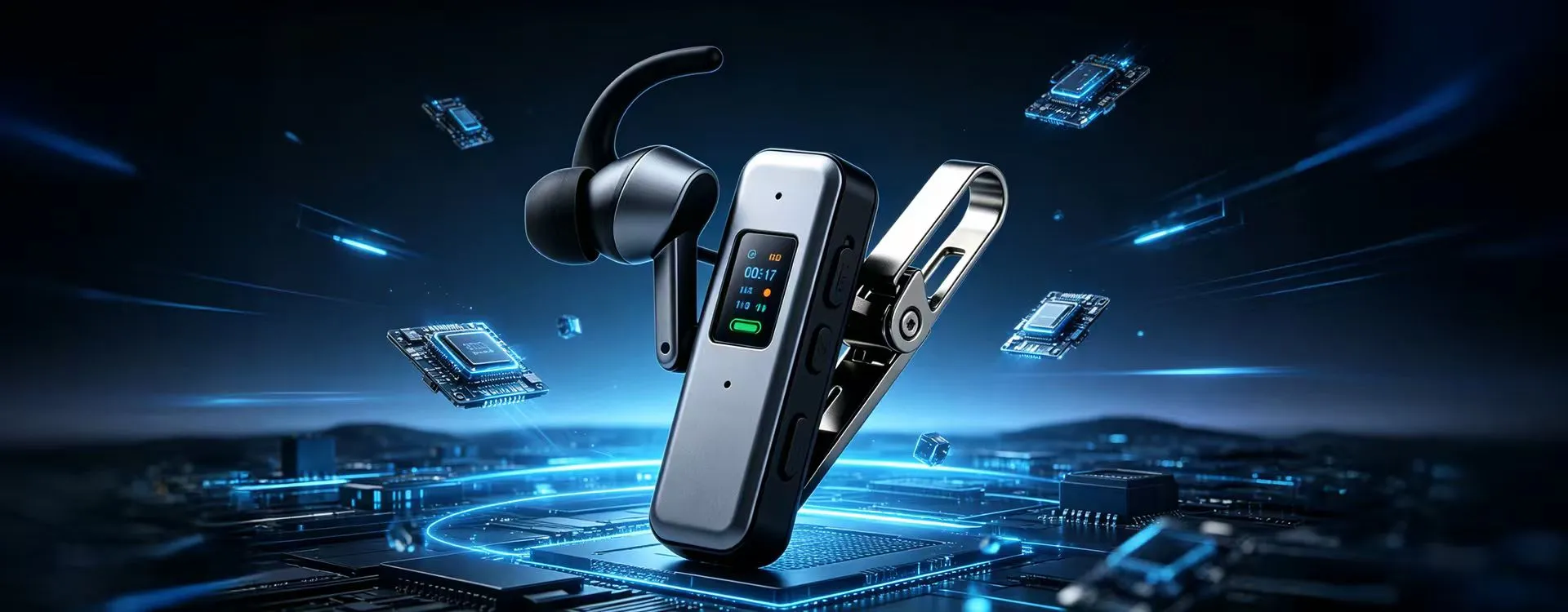
When a squadmate complains about "muffled" or "distant" voice, the root cause is usually in the acoustic front-end, not the network. A gaming microphone's clarity is decided before any DSP runs: by the capsule's directionality, the pick-up distance, and how cleanly the voice enters the sound port. Getting these three factors right matters more than adding heavier processing later, because no algorithm can fully rebuild detail that was never captured.
Most gaming headsets use a cardioid MEMS or ECM capsule that picks up sound within a 30–60° cone in front of the mic, naturally rejecting keyboard clatter and room reverberation from the sides and rear. Omnidirectional capsules cost less but swallow mouse clicks and mechanical keystrokes, dragging down the signal-to-noise ratio on the receiving end. Pick-up distance is just as critical: keep the mouth 20–40 mm from the mic port so the proximity effect adds low-end body and loudness. Beyond 60 mm, voice occupancy drops and ambient sound takes over — a deficit that later-stage processing cannot recover.
Pop noise from plosive bursts ("p" and "b" sounds) slams the diaphragm and produces low-frequency thumps; a sound tube plus windscreen solves it cheaply, with foam density balanced between pop attenuation and high-frequency loss. Clipping happens when default gain is too hot for shouting players — hard clipping sounds harsh to teammates, so a multi-stage gain design with a soft limiter is the fix. Background noise splits in two: steady fan hum responds well to spectral subtraction, while sudden keystrokes need dual-microphone phase cancellation. These choices belong in the specification phase, not after production.
Half of mic quality is mechanical. The acoustic port above the capsule should be 1–1.5 mm: larger invites wind noise, smaller rolls off highs. Seal the capsule against the internal cavity with a gasket or foam ring, or speaker audio leaks back into the mic path as echo. On the electrical side, bias the capsule through RC filtering, choose a low-noise preamp, and reserve 10–20 dB of gain trim so the same PCBA can be tuned across different enclosure designs without unit-to-unit variation.
When teammates hear their own voice echoed back, speaker audio is leaking into the mic path — that is a job for acoustic echo cancellation (AEC) at the signal level. For streaming and competitive play, sidetone monitoring lets users hear themselves in real time and adjust volume and distance on the fly. In-game voice also favors low-complexity codecs with heavy post-processing disabled, keeping end-to-end latency under 50 ms so players stop talking over each other.
Q: Why does my voice sound muffled to teammates?
A: Usually the mic sits too far from the mouth, or the sound port is blocked by foam or structure, rolling off high-frequency detail. Keep the mouth 20–40 mm from the capsule, check that the sound channel is clear, and if the low end is too thick, cut below 200 Hz during tuning.
Q: Is a dual-mic ENC array mandatory for gaming headsets?
A: No. In quiet rooms, a unidirectional capsule with proper gain management meets clarity targets. For noisy cybercafes or dormitories, a dual-mic array that cancels sudden noise through phase difference gives a clearly better signal-to-noise ratio for teammates.
Q: Teammates hear an echo of themselves — what causes it?
A: Speaker audio is leaking back into the microphone. Verify earcup leakage and volume first, confirm AEC is enabled, and check that the mic and speaker cavities on the PCBA are properly sealed and isolated, then re-check the acoustic port position.
Shenzhen Liwei Electronic Technology Co., Ltd has 12 years of experience in audio headset electronic solution design, offering one-stop services from chip selection and PCBA customization to full electroacoustic tuning. We have delivered gaming headsets, live-streaming in-ear monitors, and wireless audio solutions for 15+ well-known brands and 300+ customers. Request a Quote to get a custom audio solution for your next gaming product.
Shenzhen Liwei Electronic Technology Co., Ltd has 12 years of experience in audio headset electronic solution design, offering chip selection, PCBA customization and full electroacoustic tuning for 15+ well-known brands and 300+ customers. Request a Quote for a custom audio solution.
Keywords: gaming microphone, voice clarity, pick-up distance, ENC, PCBA design