
Design solutions that pursue the sound quality and experience you need
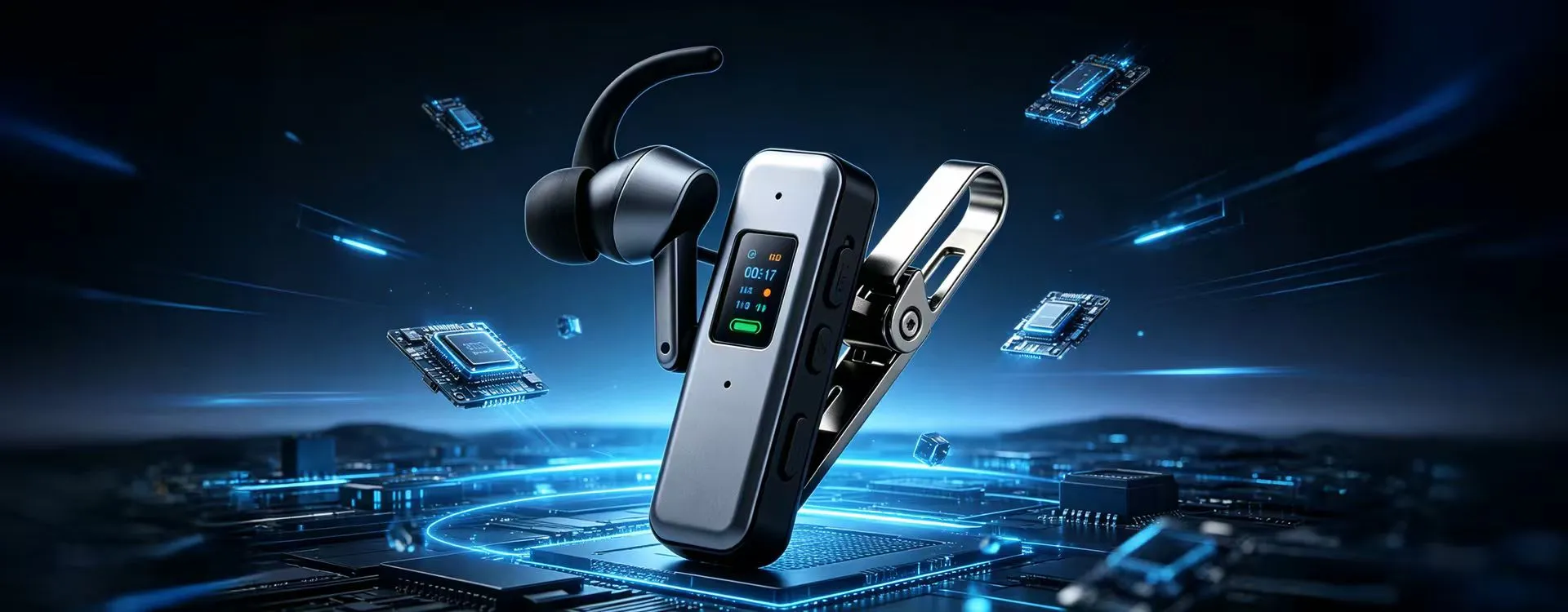
What justifies the premium price of gaming headsets? The answer lies in DSP audio processing. This article breaks down footstep enhancement algorithms, game EQ preset design logic, and the three critical metrics—latency, power consumption, and DSP compute—that define a competitive gaming audio solution.
Music headphones aim for flat frequency response and faithful reproduction. Gaming headsets do the exact opposite—they are designed to amplify information. Footsteps, reload sounds, and ability cues must be deliberately emphasized. The underlying technology making this possible is Digital Signal Processing (DSP).
Mainstream gaming headset solutions typically integrate a dedicated DSP chip or leverage the DSP core inside a Bluetooth SoC to apply real-time processing at the end of the audio chain. Processing latency must stay below 20 ms; anything higher causes audible sync issues that degrade competitive performance.
In FPS games, enemy footsteps concentrate in the 200 Hz–2 kHz range and are often masked by background music and environmental effects. The core idea behind footstep enhancement is to apply dynamic gain to this frequency band while suppressing energy elsewhere.
In practice, solution providers typically use multi-band dynamic range compression (DRC) with sidechain detection. The sidechain signal monitors transient changes in the 200 Hz–2 kHz range. Once a pulse pattern matching footsteps is detected, the algorithm instantly boosts gain in that band by 3–6 dB. Higher-end solutions add an adaptive threshold that adjusts the trigger gate based on the overall volume of the current game scene, preventing over-amplification in quiet moments and missed cues during intense action.
Gaming headsets usually ship with multiple EQ presets: FPS mode (emphasizes mid-high frequencies for footsteps), MOBA mode (boosts ability sounds and voice clarity), and Cinema mode (enhances low-frequency atmosphere). These presets are essentially pre-configured multi-band parametric EQ parameter sets that reshape the overall frequency response at the press of a button.
From a solution design perspective, EQ preset storage and switching follow two implementation paths. The first is to embed multiple parameter tables in the DSP firmware and switch between them via a physical button or app command. The second—and currently dominant—approach is to expose the parameter tables to the headset brand for customization, with the brand's app pushing settings to the headset over BLE. This offers far greater flexibility and is the direction the industry is heading.
For headset brands evaluating gaming audio solutions, three metrics matter most: DSP compute power (determines algorithm complexity), end-to-end latency (must be <20 ms), and power consumption (directly impacts battery life). Mature Bluetooth gaming platforms such as the JieLi AC7006 series already bundle footstep enhancement and multiple gaming EQ presets. Brands can enable the corresponding modules in the SDK and fine-tune parameters for rapid mass production.
Q: Does footstep enhancement degrade music quality?
A: It alters the frequency balance, but that is intentional for gaming scenarios. Music mode can disable the enhancement and restore standard frequency response.
Q: How much does DSP latency affect gameplay?
A: The human perception threshold for audio-video sync is around 20–40 ms. Beyond this, players clearly notice "laggy gunfire," which hurts reaction time and decision-making.
Q: Can brands customize their own EQ curves?
A: It depends on the solution provider's openness. Mainstream platforms like JieLi offer SDK-level parameter interfaces, allowing brands to adjust and flash their own curves using bundled tools.
Shenzhen Liwei Electronics Technology Co., Ltd. specializes in audio headset electronic solution design, offering one-stop services from chip selection to complete PCBA solutions. With 12 years of industry experience serving 15+ well-known brands and 300+ clients, our gaming headset solutions cover Bluetooth, Wi-Fi, and 2.4 GHz platforms, supporting footstep enhancement, low-latency mode, and app-customizable EQ. Contact Liwei Electronics for tailored audio solutions.
Shenzhen Liwei Electronics Technology Co., Ltd. specializes in audio headset electronic solution design, offering one-stop services from chip selection to complete PCBA solutions. With 12 years of industry experience serving 15+ well-known brands and 300+ clients, our gaming headset solutions cover Bluetooth, Wi-Fi, and 2.4 GHz platforms. Contact Liwei Electronics for tailored audio solutions.
Keywords: gaming headset DSP, footstep enhancement algorithm, game EQ preset, low latency audio solution, gaming audio solution design