
Design solutions that pursue the sound quality and experience you need
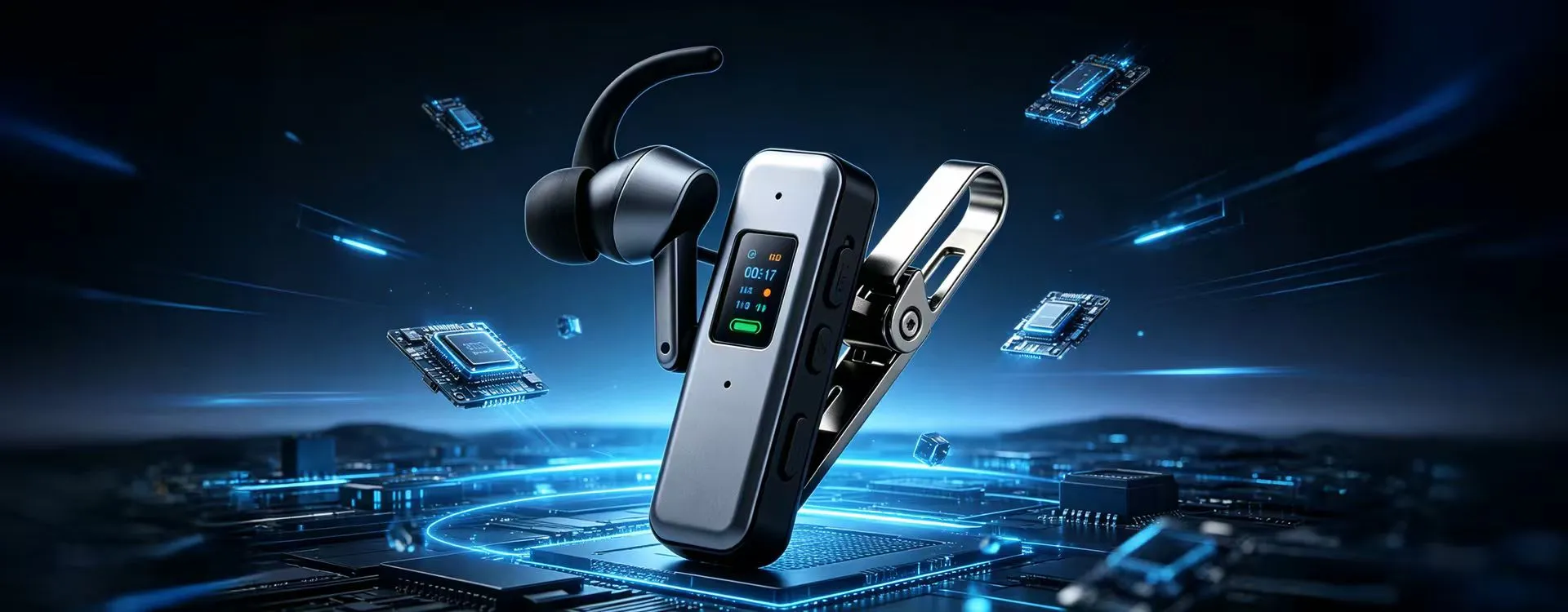
A detachable microphone lets one headset cover both gaming at the desk and commuting on the street. But the interface reliability, hot-plug detection, and mute control issues that come with a removable boom are where a lot of projects stumble at mass production. This article covers the four engineering angles that matter most—connector format, microphone bias, plug detection, and the difference between hardware and software mute—so brands can make the right trade-off between mechanical design and circuitry.
A gaming headset needs a high-SNR boom mic positioned near the mouth to keep team voice chat clear. But the moment you take the headset outside, that boom is awkward to wear and visually intrusive. A detachable design resolves the conflict: plug it in for gaming, pull it off for commuting. For brands it is also a genuine differentiator—a well-executed detachable mechanism makes the whole product feel more premium. The catch is that the more intricate the mechanism, the more tightly mechanical and electrical behavior become coupled. That coupling is the root reason detachable-microphone designs carry higher mass-production risk than fixed booms.
There are two dominant approaches: the 3.5 mm TRRS plug and the magnetic pogo pin interface. The TRRS trap is that there are two competing wiring orders, CTIA and OMTP. Mixing them leaves the microphone inoperative or causes crosstalk, so the design must commit to CTIA and handle compatibility explicitly. Magnetic interfaces plug in more cleanly but demand tighter tolerances on magnet alignment, pin travel, and plating durability. Electrically, electret microphones need bias supply while MEMS microphones need stable power and a clock. The connector area also needs ESD protection—users touch the pins with their fingers, and that static has to have somewhere to go other than the chip.
A detachable microphone must tell the host whether it is present. The common approach uses a detection pin on the connector: insertion pulls the pin low or divides it through a bias resistor, and the host switches the audio input source once it reads the level change. After removal, the system falls back to the built-in microphone or stops the uplink entirely. Two details are frequently overlooked. The first is debouncing—mechanical insertion produces contact bounce, so firmware needs a time window to filter it, otherwise the source flip-flops. The second is the hot-plug transient: an unclamped voltage step during insertion can produce an audible pop at the amplifier or ADC input, and that pop defines the user's first impression.
Mute control splits into two paths. Hardware mute uses a switch to physically break the microphone signal path. It is highly reliable, does not depend on firmware, and is the form most readily accepted by call-certification programs. Software mute is triggered by a button or app command and drives uplink level to zero inside the DSP. It is more flexible but carries the risk of a firmware fault leaving the mic live. Most shipping products combine both. Whichever is used, the headset must provide clear mute-state feedback—an indicator LED, an audible cue, or an unambiguous switch position. Without it, users cannot confirm during a meeting whether they are muted, and that is a hard requirement for platforms such as Teams and Zoom.
Q: Why does a TRRS connector sometimes fail to recognize the microphone?
A: It is usually a CTIA versus OMTP wiring mismatch. The two standards place the microphone and ground contacts in opposite positions, so the wrong combination breaks the microphone return path. The design should commit to one standard and handle compatibility deliberately.
Q: How should detachable microphone insertion life be evaluated?
A: It depends on the interface. A 3.5 mm jack is typically validated by insertion cycle count, while a magnetic pogo pin interface also needs pin travel distance and plating wear assessed. Run an accelerated insertion test against the target life and keep margin.
Q: What makes a hardware mute switch better than software mute?
A: A hardware mute physically breaks the signal path, so it does not depend on firmware running correctly and cannot fail due to a system hang. That makes it considerably easier to pass call-platform certification.
Shenzhen Liwei Electronics Technology Co., Ltd. specializes in audio headset electronic solution design, offering one-stop services from chip selection to complete PCBA solutions. With 12 years of industry experience serving 15+ well-known brands and 300+ clients, our gaming headset solutions cover detachable microphone interface design, plug-detection circuitry, ESD protection, and both hardware and software mute control, along with test support for mainstream call-platform certification. Request a Quote for a tailored audio solution.
Shenzhen Liwei Electronics Technology Co., Ltd. specializes in audio headset electronic solution design, offering one-stop services from chip selection to complete PCBA solutions. With 12 years of industry experience serving 15+ well-known brands and 300+ clients, our gaming headset solutions cover detachable microphone interface design, plug-detection circuitry, ESD protection, and both hardware and software mute control. Request a Quote for a tailored audio solution.
Keywords: detachable microphone, gaming headset microphone design, mute control solution, TRRS interface design, gaming audio solution design