
Design solutions that pursue the sound quality and experience you need
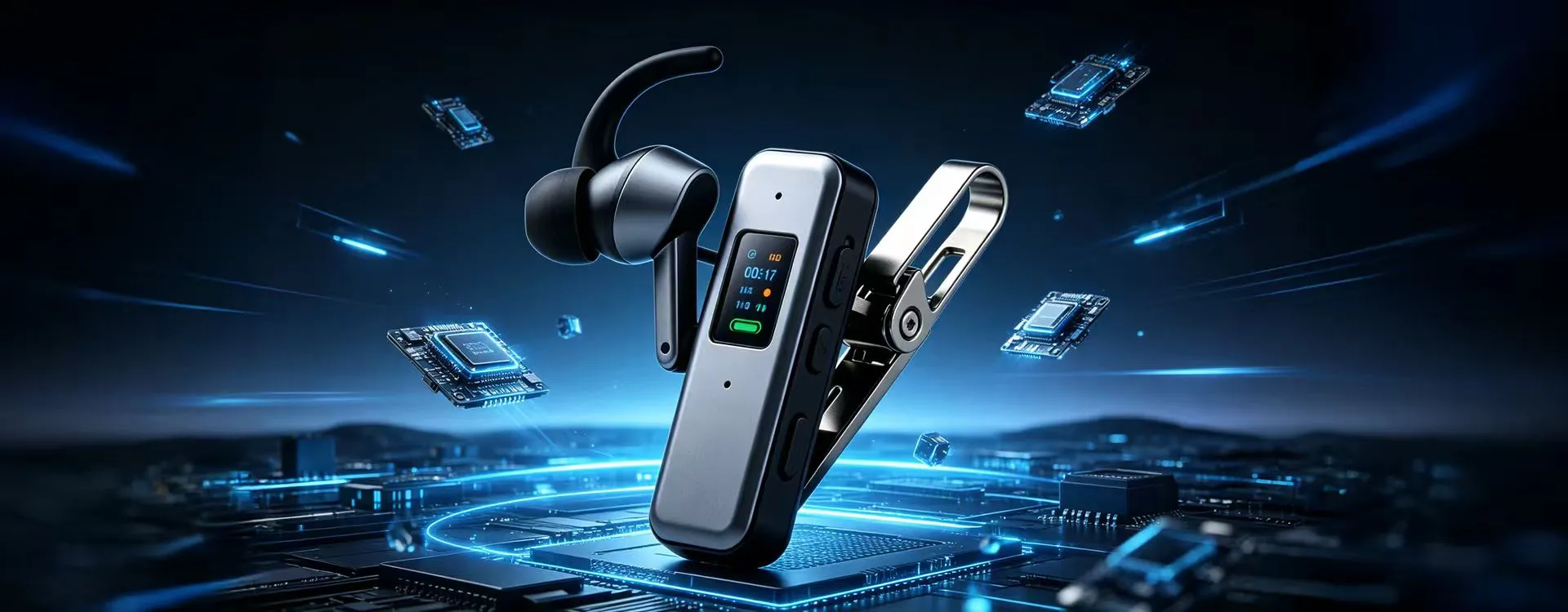
For live streaming hardware, the listener experience is decided less by "effects" and more by whether the audio chain — microphone, gain staging, monitoring, and encoding — is clean, quiet, and low-latency. This article breaks down each stage for brand owners and product managers planning a streaming headset or microphone PCBA solution.
Streaming microphones live or die on noise floor, frequency response, and consistent polar pattern. Condenser capsules capture detail well in treated rooms; dynamic capsules reject room noise, making them better for untreated home setups. For a practical spec, target SNR of 65dB or better and a maximum SPL of at least 110dB to avoid clipping. Cardioid single-direction pickup remains the streaming standard, suppressing keyboard clatter and room reflections from the sides and rear. In headset-integrated designs, MEMS or electret capsules must be paired with a well-filtered preamp so that self-noise is not amplified downstream.
Improper gain is the most common failure point in amateur streams. Too little gain forces listeners to raise volume later — along with the noise floor; too much causes clipping. Engineer the level so normal speech sits between -18dBFS and -12dBFS, leaving 12dB or more of headroom. On the hardware side, use low-noise op-amps with careful power-supply filtering: ripple on the MEMS bias line converts directly into audible noise. A hardware limiter or soft knee compressor should be included so sudden shouting does not knock the whole chain offline.
Any co-host or voice-chat scenario must deal with echo: the far-end audio plays through speakers, gets re-picked by the local microphone, and returns. Hardware AEC algorithms help, but headset solutions solve it physically by isolating playback from pickup — which is why they are the de facto standard for live co-streaming. Monitoring matters just as much: the streamer needs to hear their own voice with under 20ms latency to avoid disorientation, plus an independent headphone mix with adjustable voice-to-music ratio. "Can't hear myself" is the root of most timing and volume mistakes on air.
Final-stage parameters determine whether careful upstream work survives delivery. Most platforms accept AAC at 128–192kbps, 48kHz stereo; pushing higher bitrates mainly risks network-induced stalling, while lower rates audibly degrade the mix. Keep total latency (pickup → processing → encode → push → playback) within about 2 seconds for standard streaming, and within roughly 400ms for interactive co-streaming via platform support. USB sound card and streaming headset solutions must guarantee driver compatibility with OBS-class software and a stable low-latency data path end to end.
Q: Should I use a dynamic or condenser microphone for streaming?
A: It depends on the room. For untreated rooms, choose a dynamic mic — its low sensitivity suppresses ambient noise and reverb. In a quiet, acoustically treated studio, a condenser captures more vocal detail. For streaming headsets, a MEMS microphone paired with a noise-reduction algorithm meets most platform requirements.
Q: Why does my stream have hiss or background noise?
A: Three usual causes: gain set too high amplifying the microphone's self-noise; USB power ripple or grounding issues introducing hum — check with shielded cables and independent power; or long unshielded audio cables. Control noise at the first gain stage, because every added gain stage accumulates it.
Q: The co-host hears their own voice back — how do we fix it?
A: That is acoustic echo: speaker audio being re-picked by the microphone. The most effective fix is headphone monitoring, which physically breaks the echo path. If speakers are required, enable AEC and position the microphone away from the speaker's direct field. This is exactly why headsets dominate live co-streaming setups.
Shenzhen Liwei Electronic Technology Co., Ltd has over 10 years of experience in audio solution design, delivering complete microphone and PCBA solutions for streaming headsets, sound cards, and karaoke headphones — covering pickup, noise reduction, echo cancellation, and monitoring output. Contact us for a custom live streaming audio solution.
Shenzhen Liwei Electronic Technology Co., Ltd has over 10 years of experience in audio solution design, offering complete microphone and PCBA solutions for streaming headsets and sound cards. Request a Quote for a custom live streaming audio solution.
Keywords: live streaming audio chain,streaming headset solution,microphone pickup,echo cancellation