
Design solutions that pursue the sound quality and experience you need
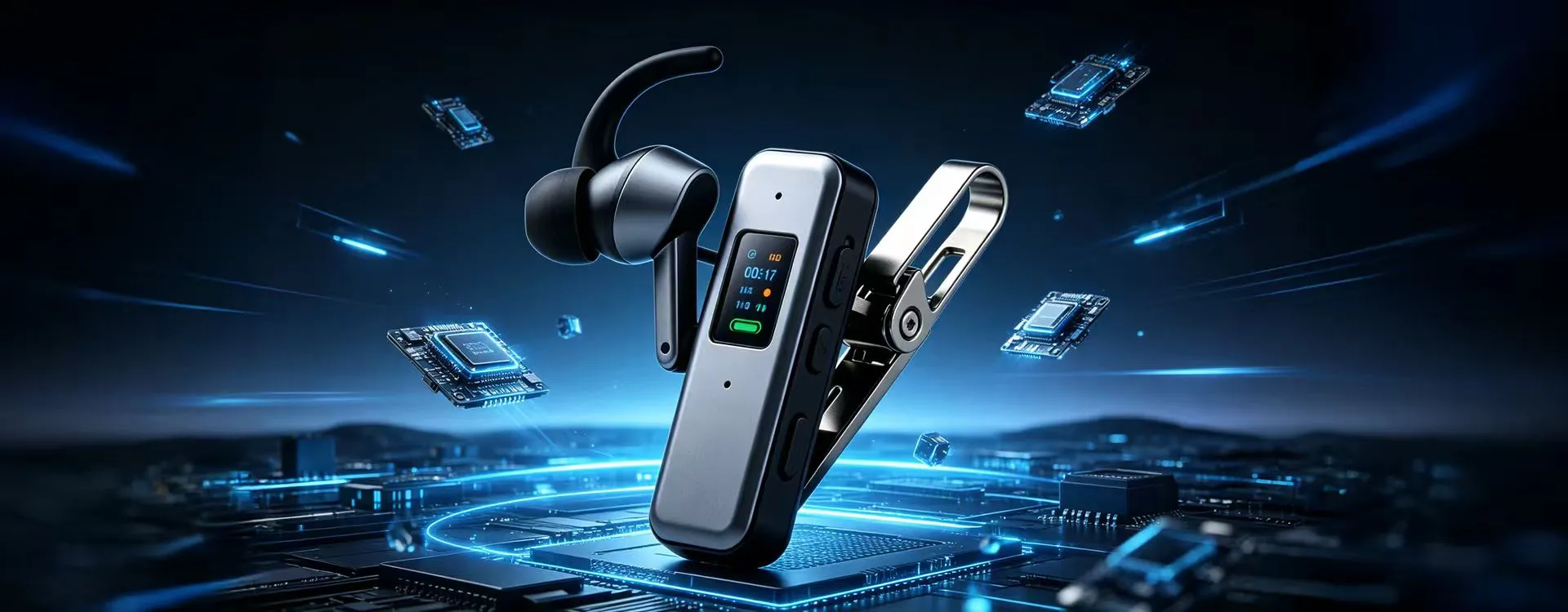
In live streaming, hosts often record at home or in noisy spaces where air conditioning, keyboard clicks, and background conversations degrade vocal presence. A live-streaming noise-canceling microphone combines directional pickup with DSP noise reduction to preserve the speech band while suppressing ambient sound, making it a critical part of any professional streaming audio setup.
The first layer of ambient rejection comes from microphone directivity. Omnidirectional capsules pick up sound equally from all directions and suit multi-person meetings, while streaming usually benefits from cardioid or supercardioid patterns that are sensitive to the front and attenuate side and rear sources. Placing the microphone 15 cm to 25 cm from the mouth and angling it away from keyboards and monitor fans can reduce ambient pickup by 10 dB to 15 dB acoustically. Suspended boom arms or desktop scissor stands further reduce desk reflections and mechanical noise for fixed-camera streams.
Directional pickup solves direction, not co-located steady-state noise, so DSP noise reduction is required. Single-microphone solutions rely on deep-learning models to classify speech and noise. They are simple and cost-effective but generalize poorly to noise types not seen during training. Dual-microphone solutions use beamforming based on phase and level differences between two capsules. They enhance the target direction and suppress off-axis noise physically, often improving SNR by more than 15 dB. Mid-to-high-end streaming headsets and lavalier microphones commonly use dual-mic ENC with windscreen covers to attenuate low-frequency air conditioning and high-frequency keyboard clicks.
A streaming microphone must deliver clean audio while supporting low-latency sidetone monitoring. Excessive algorithmic delay causes the host to hear their own voice late, affecting speech rhythm and expression. Engineers typically keep the full-chain latency below 30 ms by co-optimizing the microphone DSP and headset DAC. When monitor volume is high or the microphone sits close to the earcup, acoustic feedback howling can occur. Adaptive feedback cancellation (AFC) plus dynamic limiting prevents howl while maintaining loudness. Shenzhen Liwei Electronic Technology Co., Ltd. integrates noise reduction, AGC, AFC, and EQ into a single processing chain for live-streaming audio solutions, giving hosts a stable and clear vocal foundation.
Q: Should I choose single-mic or dual-mic noise reduction for live streaming?
A: Choose single-mic AI noise reduction when budget or mechanical space is limited. For fixed setups that demand higher audio quality and ambient rejection, dual-mic beamforming is more reliable, especially against keyboard and fan noise from the same direction.
Q: Why does voice sound muffled after noise reduction is enabled?
A: Some algorithms suppress consonant energy above 4 kHz along with noise, reducing clarity. Select an algorithm that protects the speech band, or apply gentle high-shelf boost after noise reduction.
Q: What is the optimal mouth-to-microphone distance?
A: For cardioid streaming microphones, 15 cm to 25 cm is recommended. Too close exaggerates plosives and breath noise; too far raises the ambient-to-speech ratio. Use a pop filter and boom arm to fine-tune placement.
Shenzhen Liwei Electronic Technology Co., Ltd. specializes in audio headset electronic solution design and complete chip-plus-PCBA solutions. With over 10 years of experience serving 300+ clients, we offer integrated live-streaming microphone and karaoke headset PCBA solutions featuring single/dual-mic noise reduction, low-latency monitoring, and multi-platform compatibility. Contact Liwei Electronic for your tailored audio solution.
Keywords: live streaming microphone, ambient noise suppression, dual-mic ENC, beamforming, streaming audio solution