
Design solutions that pursue the sound quality and experience you need
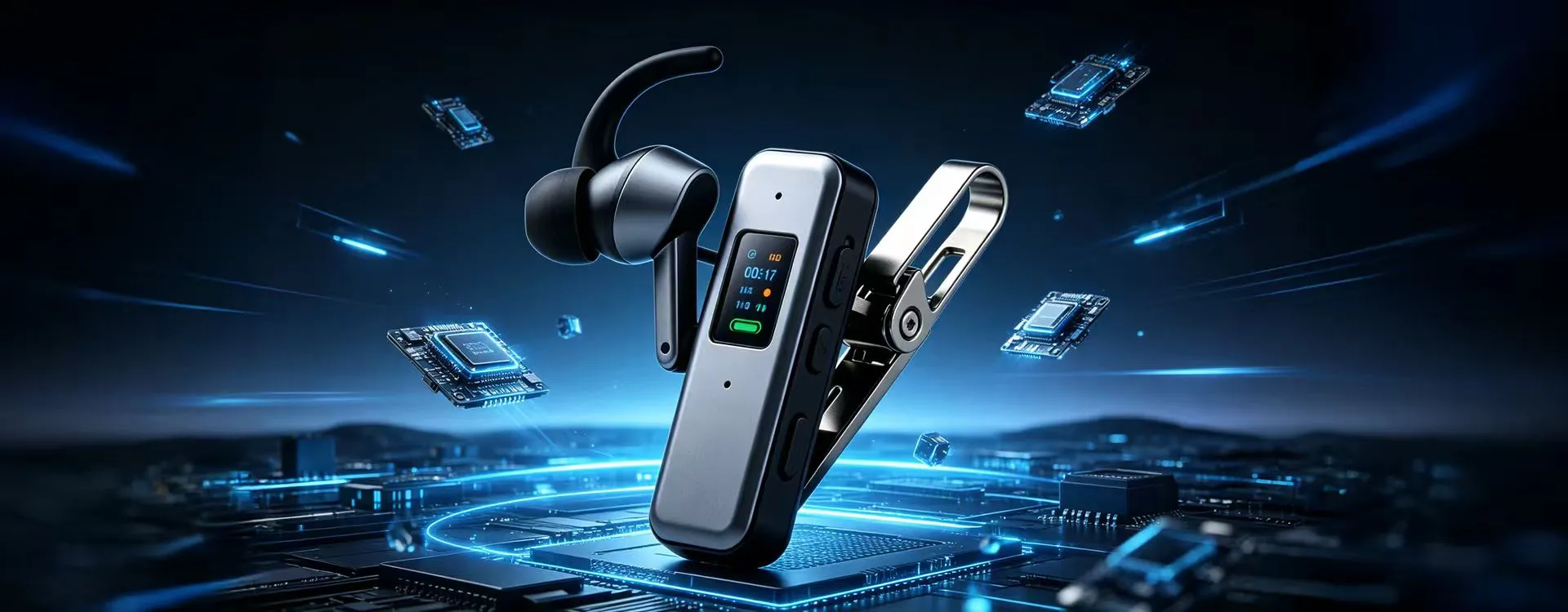
The first stage of any pitch-correction chain is real-time F0 estimation. Autocorrelation- and YIN-class estimators run on each voiced frame, and a resolution of 10 cents or better is required for corrections that sound natural. Once the sung pitch is known, the algorithm compares it against the target scale (12-tone equal temperament, or a user-selected key) and computes the deviation. Correction is performed by true pitch shifting — phase vocoder or time-domain granular synthesis on short overlapping frames — which moves F0 to the target note while preserving duration and formant character. In practice, correction strength and response time must be balanced: an overly fast response produces mechanical pitch jumps, while a slow one cannot keep up with fast phrasing. A correction window of 20–60 ms with smooth crossfades is a good engineering compromise.
Voice-change effects alter perceived age and gender characteristics. Cute or deep-voice presets are built mainly on global F0 shifting, paired with formant shifting to avoid the "slowed tape" artifact: shifting F0 alone without formants sounds like slowed-down playback, while formants alone sound like a telephone voice. Robot and autotune-style effects take a different route — strong quantization locks the pitch onto fixed scale steps, then ring modulation or vocoder carrier effects are layered on top. On embedded platforms, simplified spectral-envelope shifting implements formant movement at a fraction of the cost of full PSOLA, making it well suited to a real-time DSP core.
Because these effects sit inside the monitoring path, latency is critical. We recommend keeping the algorithmic latency budget under 15 ms: frame length sets the floor, and a 20 ms frame with 50% overlap already costs 10–15 ms, so frames are usually shortened to 10 ms at the expense of some pitch-estimation accuracy. On the buffering side, an adaptive jitter buffer absorbs Bluetooth link fluctuations on the input, while output alignment with the backing track prevents audible timing offsets between vocals and music. On Bluetooth audio SoCs such as the AC7006, DSP headroom must be reserved for EQ, reverb, and noise reduction running concurrently, so multi-effect operation never drops frames.
A production-ready karaoke solution packages the algorithms into tunable presets: correction strength (0–100%), automatic key detection, and graded voice-change types and depth, applied via buttons or a companion app. Production testing should cover three cases: sine sweep verification of F0 detection, synthetic vocal clips for post-correction cents deviation, and THD/SNR measurement under voice-change mode. With over 10 years of experience, Liwei Electronic integrates pitch correction, voice changing, reverb, and noise reduction into complete live-karaoke headset and sound-card PCBA solutions on mature DSP platforms, backed by 8 fully automated production lines for volume delivery. Contact us to request a quote for a custom audio solution.
Q: Does pitch correction alter notes that were sung in tune?
A: No. The algorithm first evaluates pitch deviation; frames within the tolerance band (typically ±30 cents) pass through untouched. Only clearly off-pitch frames trigger correction, with smooth transitions to avoid a mechanical "everything flattened" sound.
Q: Why does a voice changer sometimes sound like slowed-down tape?
A: That happens when only the fundamental frequency is shifted without matching formant movement. A complete voice-changer algorithm processes F0 and formants on dual channels — for a cute voice, F0 rises while formants shift accordingly — to produce a natural age and gender perception change.
Q: What latency does a live karaoke solution require?
A: Audible misalignment in monitoring starts around 20 ms; for entertainment use we recommend keeping the full chain (microphone to headphones) within 30 ms. Frame length, buffering, and Bluetooth link latency all need to be allocated within that budget.
Shenzhen Liwei Electronic Technology Co., Ltd specializes in audio headset electronic solution design with over 10 years of experience, serving 15+ well-known brands and 300+ customers. We provide complete live karaoke headset, sound card and DSP mixer PCBA solutions supported by 8 fully automated production lines. Contact Liwei Electronic for a custom audio solution.
Keywords: pitch correction, voice changer algorithm, karaoke audio solution, formant shifting, live streaming audio