
Design solutions that pursue the sound quality and experience you need
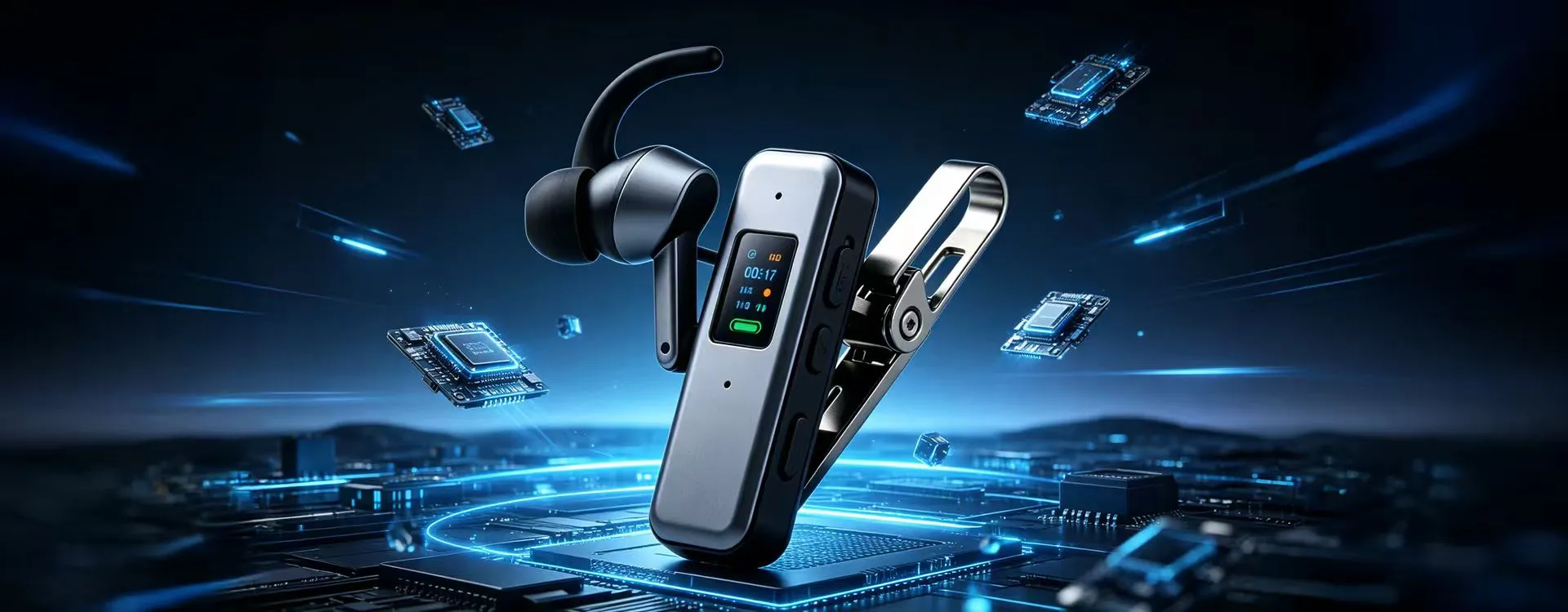
Audio testing is the essential bridge between R&D and mass production for headphones and speakers. This article covers the common measurement signals — sine waves, swept sine, and pink noise — and the standard methods for measuring frequency response, THD, and SNR, plus how production-line testing turns these into fast, objective pass/fail decisions.
The first step in any audio test is choosing the right stimulus. A sine wave is the most basic signal, typically used for single-point response and distortion checks, with 1 kHz as the reference level. A logarithmic sweep from 20 Hz to 20 kHz captures the full frequency response curve in one pass and is the mainstream choice for electroacoustic testing. Pink noise, whose energy distribution approximates human hearing, is used for subjective listening evaluation and speaker burn-in. Burst signals complement these for transient response and latency measurement.
Frequency response is the core specification of any transducer. The standard method drives the device under test with a constant-level sweep and captures the output with a measurement microphone — for headphones, an ear simulator per IEC 60318-4. Engineers evaluate not only curve smoothness but also the effective bandwidth: whether the claimed response range matches the actual -10 dB roll-off points. The curve also reveals crossover design and acoustic cavity tuning quality, making it the most important reference during development.
Total harmonic distortion (THD) quantifies harmonic content produced when a speaker is driven with a sine wave, usually measured at 1 kHz at rated power; headphone products should ideally stay below 1%. Intermodulation distortion (IMD), measured with a two-tone signal, better reflects degradation under large dynamic excursions. Signal-to-noise ratio (SNR) compares output level to the noise floor. In Bluetooth designs, SNR is affected by the entire DAC and amplifier chain, so the complete link should be re-measured rather than relying on chip datasheet figures.
Production testing has different priorities from lab testing: speed and objective verdicts. A typical station fixes the unit in a test fixture, plays a sweep, and an automated system judges frequency response, sensitivity, THD, and left/right consistency against upper and lower limits within seconds, rejecting outliers automatically. Microphone pickup and button tests are added on the same line. Sensible limits come from large-sample statistics gathered during development — too tight and good units are scrapped, too loose and defects slip through. Establishing a dedicated standard per product line is key to shipping consistency.
Q: Why doesn't the measured frequency response fully match what we hear?
A: Frequency response is an objective physical quantity, while perception also depends on harmonic structure, phase, ear coupling, and individual hearing differences. An ear simulator models a standard ear, not a real listener, so a passing curve is a necessary but not sufficient condition — final tuning still requires subjective listening.
Q: How does testing a Bluetooth headphone differ from a wired one?
A: A Bluetooth unit requires a wireless link, so the stimulus passes through codec compression and the measured distortion includes codec losses. RF performance, latency, and reconnection behavior must also be tested. Many labs test the analog path via a wired bypass separately from the wireless path.
Q: How long does one production-line audio test take?
A: Automated measurement of frequency response, sensitivity, THD, and channel consistency typically takes 5–15 seconds per unit; adding microphone and button tests brings it to roughly 20–30 seconds. Higher-throughput lines parallelize stations with dedicated fixtures and pass/fail standards supplied by the solution provider.
Shenzhen Liwei Electronic Technology Co., Ltd. has over 10 years of experience in audio headset electronic solution design, offering complete services from electroacoustic tuning and PCBA development to production test standards across live-streaming, gaming, telephony, and broadcast speaker scenarios. Contact Liwei Electronic for custom audio solutions and test support.
Shenzhen Liwei Electronic Technology Co., Ltd. has over 10 years of experience in audio headset electronic solution design. Contact us for custom audio solutions.
Keywords: audio testing,frequency response measurement,THD,SNR