
Design solutions that pursue the sound quality and experience you need
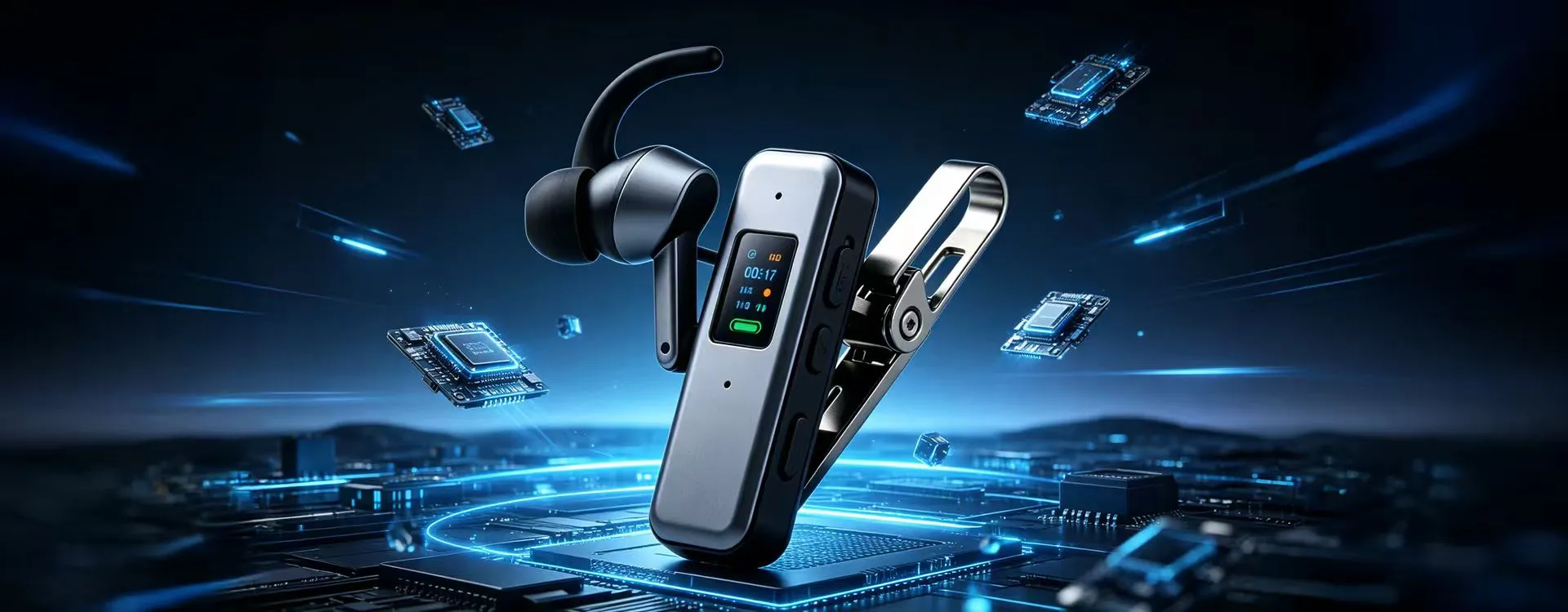
For battery-powered audio products, battery life is often noticed by users long before sound quality. A pair of Bluetooth headphones rated for 10 hours that lasts only 4 hours usually has nothing wrong with the cell itself — the real culprits are an incomplete sleep architecture or an uncontrolled power budget. The essence of a sleep architecture is letting the system progressively shut down or downclock its CPU, radio, and amplifier whenever no audio task is active, while keeping only the wake-up sources alive. In true wireless earbuds, cutting standby current from 100 µA to 20 µA per bud can extend runtime several times over, which is why standby current should be a hard requirement when comparing audio SoC platforms.
A mature audio solution typically implements three sleep levels. Light sleep engages when an audio task ends: the main SoC downclocks and the amplifier enters a muted, low-bias state, ready to resume within a few hundred milliseconds — ideal for gaps between tracks. Deep sleep shuts down the RF link and codec, keeping only a button, in-ear detection sensor, or BLE advertising as a wake-up source for long idle periods. Shipping mode leaves only battery voltage supervision powered, intended for factory and warehouse storage. A state machine transitions automatically between levels, and transition latency must stay imperceptible: waking from deep sleep to playable audio should complete within about one second.
A power budget is the master ledger of low-power design. Start from battery capacity and target runtime to derive the allowable average current, then split it across usage scenarios — for example, 30% playback, 50% connected standby, 20% case interaction — assigning a current ceiling to each state against datasheet typicals, with 10%–15% margin. The three most common budgeting mistakes are underestimating RF retransmission power, ignoring peripherals such as indicator LEDs and vibration motors, and missing the quiescent drain of charging-protection circuitry. A budget is not a frozen document: during prototyping, measure each state with a current analyzer and recalibrate; deviations beyond budget call for architecture-level changes, not simply a bigger battery.
First, keep wake-up sources minimal — every always-on sensor pays a standby-current toll, so prefer low-power optical in-ear detection over continuously polled capacitive sensing. Second, partition the power tree by load: give the audio amplifier its own rail so large-signal current swings do not disturb sleep-state judgment and trigger spurious wake-ups. Third, build current telemetry into the firmware and sweep each sleep state on every production unit during line testing, intercepting any units with abnormally high leakage before they ship. At Liwei Electronics, all three points are default design rules in our headphone and speaker PCBA platforms, applied from schematic review through production test.
Q: Why does a Bluetooth headset disconnect or reconnect slowly after waking from sleep?
A: Usually the deep-sleep state shut the radio down completely, forcing a full connection sequence after wake-up. A better design keeps BLE advertising or a connectable window alive during sleep and caches link parameters in RAM, so the device attempts a fast reconnect first. This typically brings reconnection within one second, which most users will not notice.
Q: What deviation between the power budget and measured current is acceptable?
A: In engineering practice, keeping measured average current within 15% of the budget is healthy. If measurements exceed budget by more than 20%, suspect spurious wake-ups, unaccounted peripherals, or abnormal RF retransmissions. Capture state-by-state current waveforms with a current analyzer to locate the cause rather than simply specifying a larger battery.
Q: Does a sleep architecture affect sound quality?
A: Sleep itself does not degrade audio quality, but a poorly sequenced power-up after wake can cause turn-on pops. The standard practice is to coordinate the amplifier enable pin with soft-start timing and release the mute only after supplies are stable. This timing protection is already built into Liwei's amplifier board solutions.
Shenzhen Liwei Electronic Technology Co., Ltd has over 10 years of experience in audio electronics design, delivering complete chip and PCBA solutions across eight product lines including hearing protection headsets, live-streaming karaoke, gaming, and LE Audio broadcast speakers. Contact Liwei for custom low-power audio solutions.
Keywords: low power design, sleep architecture, power budget, bluetooth headphone battery life