
Design solutions that pursue the sound quality and experience you need
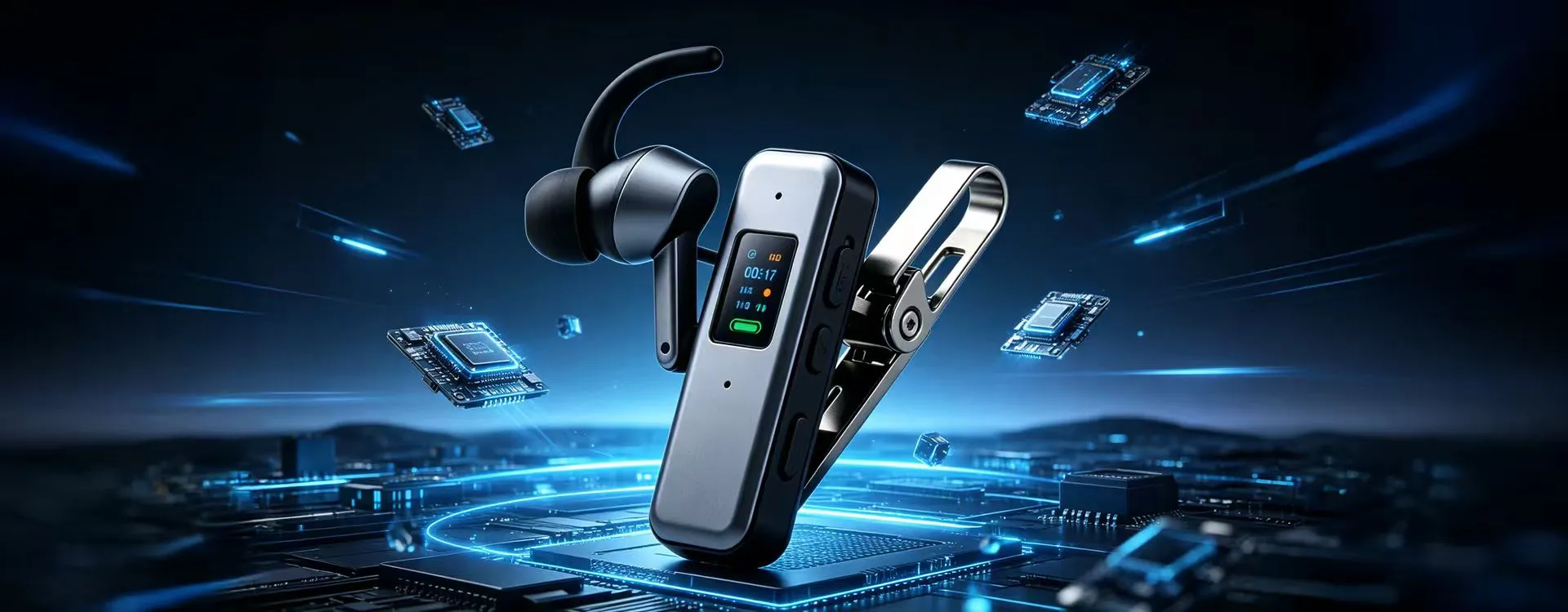
Classic Bluetooth audio is strictly point-to-point: one phone, one headset, with connection setup, encryption and clock alignment all negotiated per link. Auracast changes the topology. The transmitter packs the same audio program into broadcast isochronous streams (BIS), groups several BIS into a broadcast isochronous group (BIG), and transmits on the three advertising channels at a fixed ISO interval. Receivers lock onto the timing through periodic advertising sync (PA sync) and demodulate directly — no connection, no pairing. The practical consequence is twofold: the number of receivers is effectively unbounded, and a listener joining late never disturbs the playback of anyone already in the group. The trade-off is that the link is unidirectional and has no ACK-based retransmission, so robustness rests on transmit power, antenna design and forward error correction. In product terms, a packet loss target around one part in a thousand is the usual design goal for the transmitter.
Assistive listening is where Auracast has landed first. Airports, rail stations, theatres and classrooms share the same problem: sound is diffused through loudspeakers, so signal-to-noise ratio collapses with distance, and hearing-aid users suffer most. Once an Auracast transmitter is installed, the venue audio is broadcast directly and anyone wearing a compatible hearing aid or earbud can join by scanning a QR code, adjusting volume and EQ locally without affecting others. For hearing-aid makers this removes the coverage limitation of telecoil loops: no venue rewiring is needed, and a phone can act as a broadcast assistant to complete the join. Two product details deserve attention — a clear join interaction (QR code or assistant list) and a sane key distribution scheme for encrypted broadcasts, otherwise public venues invite both accidental and malicious joins.
Home and commercial displays form the second main line. A television, a row of treadmills in a gym, several screens in a bar: broadcast the same audio track and users listen on their own earbuds, which solves late-night viewing without waking the household and avoids the awkwardness of loudspeakers in public. These scenarios demand tighter synchronisation. If each screen decodes locally, lip sync drifts; the engineering answer is to let one host own the audio and video clock, with broadcast stream timestamps and video frame timestamps referenced to the same time base, so receivers render at the correct presentation timestamp. The other selling point is freedom to move: walk from the treadmill to the free-weight area and audio continues as long as you stay in coverage — something point-to-point Bluetooth simply cannot do.
The ecosystem has moved quickly, but three areas still need evaluation before committing. On silicon, Bluetooth 5.2 or later with an LE Audio stack is the baseline, and broadcast transmission places stricter demands on RF timing than point-to-point links: a single-antenna design must balance advertising interval, transmit power and current consumption, while an external PA or antenna diversity extends coverage at the cost of re-certification. On the stack, the transmitter needs BIG scheduling and broadcast encryption; the receiver needs PA sync, BIS demodulation and GATT-based joining through a broadcast assistant — this is where most of the engineering effort sits. On interoperability, the Bluetooth SIG now runs Auracast certification programmes, and cross-brand operation should not be assumed without it, or you get the familiar "visible but cannot connect" failure. For brand owners, the receiver is the low-cost entry point, while transmitters make sense first in product lines with a concrete venue use case.
Q: How many earbuds can one Auracast transmitter serve?
A: There is no theoretical limit, because broadcast is one-way — receivers simply demodulate and never contend for bandwidth. Practical limits come from coverage and the RF environment: dozens to a few hundred receivers in one space is realistic. A conventional point-to-point Bluetooth audio link typically serves one or two headsets, which is the fundamental difference between the two topologies.
Q: Why does joining an Auracast broadcast require a QR code?
A: A broadcast is inherently public — anything in range can capture the stream — so without differentiation, public venues would see unwanted or malicious joins. The Bluetooth SIG approach encrypts the broadcast and distributes the key through a QR code or a broadcast assistant. The phone hands the key to the earbuds, which decrypt the stream, preserving the efficiency of connectionless broadcast while keeping control over who listens.
Q: Can existing Bluetooth earbuds gain support through a firmware update?
A: It depends on the chipset. LE Audio broadcast reception relies on isochronous channel handling and needs Bluetooth 5.2 or later at the radio and link layer, so older chipsets built only for classic audio cannot be upgraded in firmware. Newer LE Audio silicon usually has the capability, but whether reception is exposed depends on the vendor's stack. Confirm certification status with the chip vendor before committing to a platform.
Shenzhen Liwei Electronic Technology Co., Ltd has over 10 years of experience in audio electronics, delivering complete PCBA solutions for LE Audio and Auracast broadcast speakers, TWS earbuds, gaming headsets and live-streaming karaoke audio, with 15+ well-known brands and 300+ customers served. Contact Liwei Electronic to evaluate an Auracast transmitter or receiver design.
Keywords: Auracast, LE Audio, broadcast audio, BIS, Bluetooth audio design