
Design solutions that pursue the sound quality and experience you need
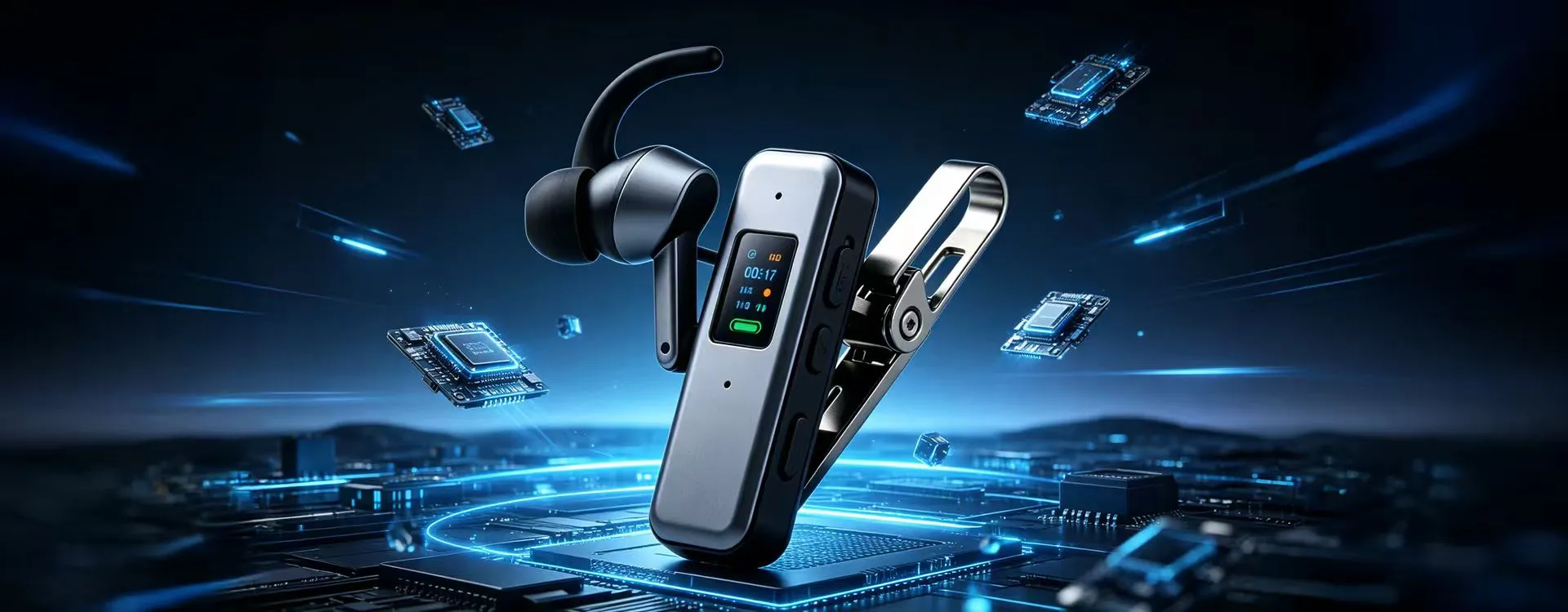
After several years of standards refinement, Bluetooth LE Audio entered volume deployment in 2026. The LC3 codec delivers sound quality superior to legacy SBC at a lower bit rate while cutting power consumption, which translates into 10%–30% longer battery life on the same cell capacity. Auracast broadcast audio opens up one-to-many scenarios: airport gate announcements, shared music in gyms, and a single source feeding multiple pairs of earbuds are all in commercial use today. For design houses, LE Audio is more than a codec upgrade — it is an architecture shift. Dual-mode coexistence with Classic Bluetooth, switching between broadcast and unicast streams, and backward compatibility with existing A2DP products all need to be planned at the design stage. When selecting a platform, verify how mature the controller's full LE Audio stack really is, because shipping with a half-ready stack means starting behind the market.
The role of AI in headphones is shifting. A few years ago AI mostly meant neural network call-noise reduction that separates speech from stationary noise. Today's more capable audio SoCs run adaptive ANC, personalized hearing compensation, and scene classification in real time on the earbud itself. Adaptive ANC tunes its filters against live ear-canal leakage, flattening the noise-attenuation variation caused by fit differences, while personalized HRTF and listening EQ let one product deliver a consistent sound signature across users. The bigger story is voice interaction: low-power keyword spotting combined with on-device model interfaces is turning the earbud into an entry point for a personal AI assistant. Brands planning new products should evaluate AI as an interaction experience, not just an ANC spec sheet number — that framing defines the differentiation space for the next generation.
Sound-quality competition now runs on two parallel tracks. On the wireless side, vendors push high-bit-rate codecs and lossless streaming; LC3 Plus and proprietary multi-connection links are approaching 24-bit/96 kHz, though bandwidth and power budgets remain hard constraints, so most shipping products are effectively high-bit-rate lossy rather than true lossless. On the wired side there is a clear revival: USB-C digital audio, Hi-Res-certified dongles, and low-latency wired links for gaming and live-streaming are all growing, confirming that "wireless for convenience, wired for quality" will coexist by scenario. From a design standpoint, pairing a wireless flagship with a wired performance model on one platform is a safer bet than betting everything on a single path.
Earbuds are extending from audio devices into wearables, with three growth directions: health sensing, hearing assistance, and open-ear wearing. Hearing health is driven by both policy and an aging population, and the boundary between prescription hearing aids and OTC hearing wellness keeps blurring. Open-ear designs keep gaining share on comfort and situational awareness, raising the bar for leakage control and low-frequency compensation. In-ear health sensing integrates heart-rate and temperature monitoring into the earbud form factor. For 2026 planning, brands should avoid the do-everything single product and segment by scenario instead — commute ANC, open-ear sports, health monitoring, and low-latency live-streaming each as its own line, sharing a common platform to dilute development cost. Liwei Electronics has structured its eight solution lines exactly this way, so brand positioning maps quickly onto the right technical platform.
Q: Will LE Audio replace Classic Bluetooth audio anytime soon?
A: Not overnight. The A2DP ecosystem covers a huge installed base, and dual-mode coexistence will remain the mainstream form through the transition. For new products, choose a controller with a proven full LE Audio stack, capture the broadcast and low-power benefits first, and migrate the source and receiver sides gradually.
Q: How much better is AI noise reduction than traditional adaptive ANC?
A: Traditional ANC handles steady low-frequency noise well but struggles with sudden transients, wind, and voice-dominated scenes. On-device neural networks switch strategies by noise type in real time and compensate for ear-canal leakage, delivering clearly better call clarity and fit consistency — at the cost of compute and power that must be budgeted early.
Q: Which technology track should smaller brands invest in first?
A: Prioritize by target scenario. For commuters, start with adaptive ANC and call-noise reduction; for sports, open-ear wearing and waterproofing come first. On a limited budget, land LE Audio compatibility and LC3 first, and treat AI interaction as a next-generation item. A platform-based approach keeps per-model development cost manageable.
Shenzhen Liwei Electronic Technology Co., Ltd specializes in audio earphone electronic solution design with over 10 years of chip and PCBA turnkey development experience, serving 15+ well-known brands and 300+ customers. Its eight solution lines cover LE Audio, AI noise reduction, open-ear and low-latency live-streaming platforms. Contact Liwei for custom audio solutions.
Keywords: headphone audio trends,LE Audio,AI noise reduction,Auracast,lossless audio